Parenting & Child Development
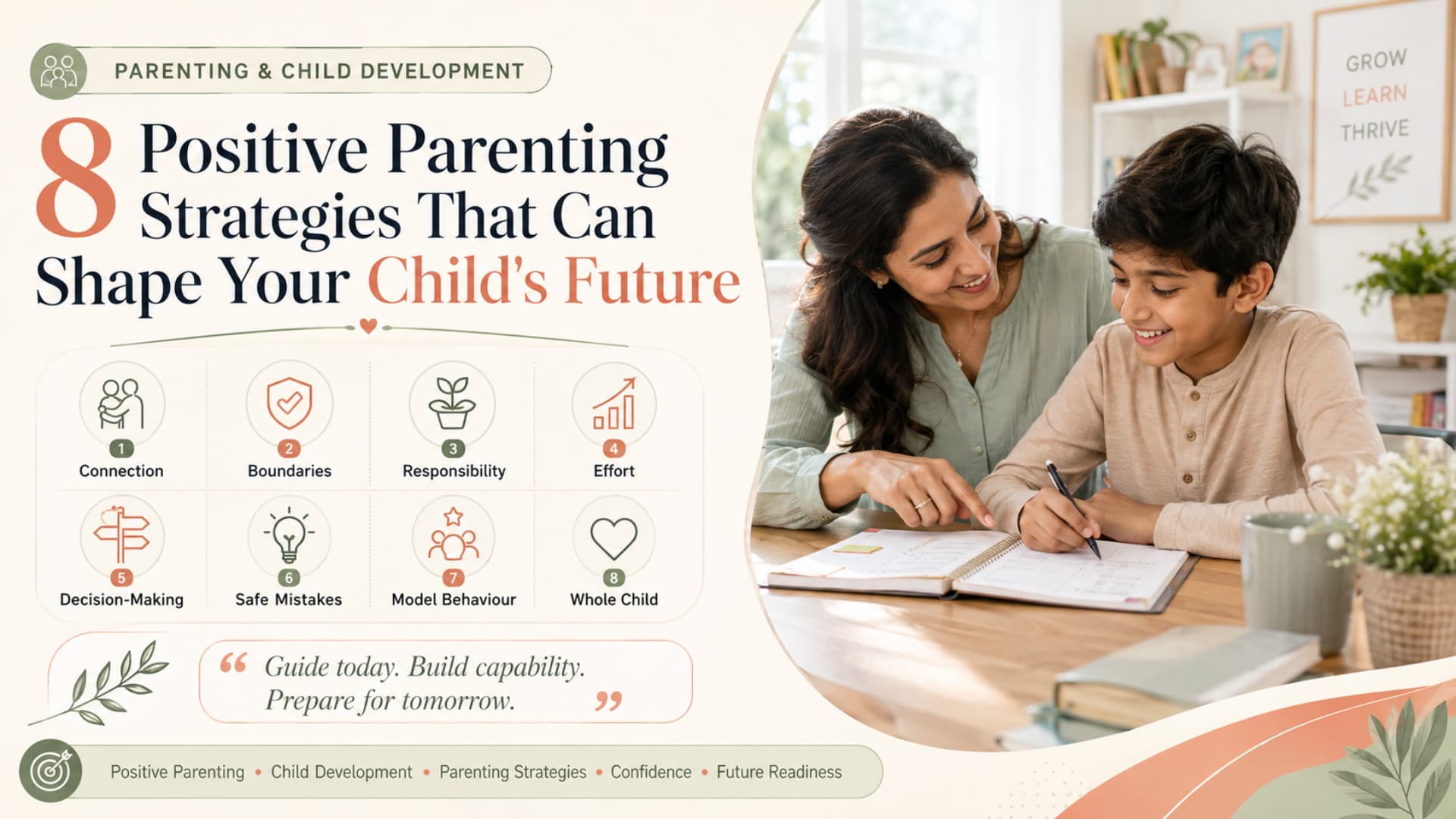
8 Positive Parenting Strategies That Can Shape Your Child’s Future
Positive Parenting • Child Development • Parenting Strategies • Confidence • Future Readiness
Parenting is not only about managing behaviour today.
It is also about helping children build the habits, confidence, values and thinking skills they will carry into the future.
Positive parenting does not mean saying “yes” to everything or avoiding discipline. It means combining love, guidance, boundaries, communication and responsibility in a balanced way.
Here are 8 positive parenting strategies that can help shape your child’s future.
________________________________________
1. Build Connection Before Correction
Children respond better when they feel heard and understood.
Before correcting behaviour, try to understand what happened.
Ask:
• What were you feeling?
• What made you react that way?
• What could you do differently next time?
Why It Matters
Connection creates trust.
When children feel emotionally safe, guidance becomes easier to accept.
Parent Tip:
Correct the behaviour without attacking the child.
________________________________________
2. Set Clear and Consistent Boundaries
Children need freedom—but they also need structure.
Clear boundaries help them understand:
• What is acceptable
• What is expected
• What happens when rules are ignored
• Why certain routines matter
Why It Matters
Consistency builds security.
Rules should be simple, age-appropriate and explained calmly.
Love and boundaries can exist together.
________________________________________
3. Encourage Responsibility Early
Confidence grows when children are trusted with meaningful responsibilities.
Depending on age, this may include:
• Organising their school bag
• Keeping their room tidy
• Planning study time
• Helping with simple household tasks
• Managing personal belongings
Why It Matters
Responsibility develops:
Independence • Discipline • Ownership • Confidence
Do not do everything for the child.
Guide them to do more for themselves.
________________________________________
4. Praise Effort and Progress
Constantly praising only marks or results can make children afraid of failure.
Instead, notice:
• Effort
• Improvement
• Persistence
• Strategy
• Consistency
Instead of:
“You are so smart.”
try:
“You kept working until you understood it.”
Why It Matters
Children begin connecting progress with effort rather than seeing ability as something completely fixed.
________________________________________
5. Let Children Make Age-Appropriate Decisions
Decision-making is a skill.
Children need opportunities to practise it.
Let them make small choices such as:
• Which task to complete first
• How to organise their study area
• Which activity to pursue
• How to solve a simple problem
Why It Matters
Decision-making builds:
Judgement • Responsibility • Confidence • Problem-Solving
Parents should guide important choices, but children also need room to think independently.
________________________________________
6. Make Mistakes Safe to Discuss
If every mistake leads to anger, children may begin hiding problems.
A better response is:
“What happened, and what can we learn from it?”
Then use:
Understand → Correct → Retry
Why It Matters
Children who can discuss mistakes openly are more likely to learn from them.
Mistakes should have consequences when needed—but also learning.
Failure should become feedback, not identity.
________________________________________
7. Model the Behaviour You Want to See
Children learn from what parents do, not only what they say.
If you want children to:
• Read
• Speak respectfully
• Manage emotions
• Stay organised
• Keep promises
• Learn continuously
they need to see those habits being practised.
Why It Matters
Children observe patterns every day.
Your behaviour often becomes a more powerful lesson than your advice.
Model first. Teach second.
________________________________________
8. Focus on the Whole Child
A child is more than marks.
Future success also depends on qualities such as:
• Communication
• Confidence
• Emotional intelligence
• Creativity
• Responsibility
• Adaptability
• Problem-solving
Why It Matters
Parents should celebrate academic progress—but also recognise personal growth.
Ask:
Is my child becoming more capable, responsible and confident?
That question is often more meaningful than marks alone.
________________________________________
The PARENT Formula
P — Provide Connection
Listen and communicate.
A — Add Clear Boundaries
Create structure.
R — Raise Responsibility
Encourage independence.
E — Encourage Effort
Value progress.
N — Nurture Decision-Making
Let children think.
T — Teach by Example
Model the behaviour you expect.
________________________________________
Key Takeaway
Positive parenting is not about being a perfect parent.
It is about creating repeated experiences that help children develop:
Confidence • Responsibility • Discipline • Emotional Strength • Independence
The goal is not to control every decision.
It is to gradually prepare children to make better decisions themselves.
Brain Gurukul Perspective
At Brain Gurukul, we believe parents are important partners in a child’s intellectual and emotional development.
When parenting combines encouragement, responsibility, healthy boundaries and learning opportunities, children become better prepared for school, careers and life.
Guide today. Build capability. Prepare for tomorrow.
Read. Learn. Apply. Grow.
________________________________________
Blog Number: 24
Blog Name: 8 Positive Parenting Strategies That Can Shape Your Child’s Future
Word Count: ~790 words
Positive Parenting • Child Development • Parenting Strategies • Confidence • Future Readiness