Teachers, Schools & Education
8 Classroom Motivation Strategies That Can Encourage Students to Participate
Student Motivation • Classroom Participation • Teaching Strategies • Student Engagement • Education
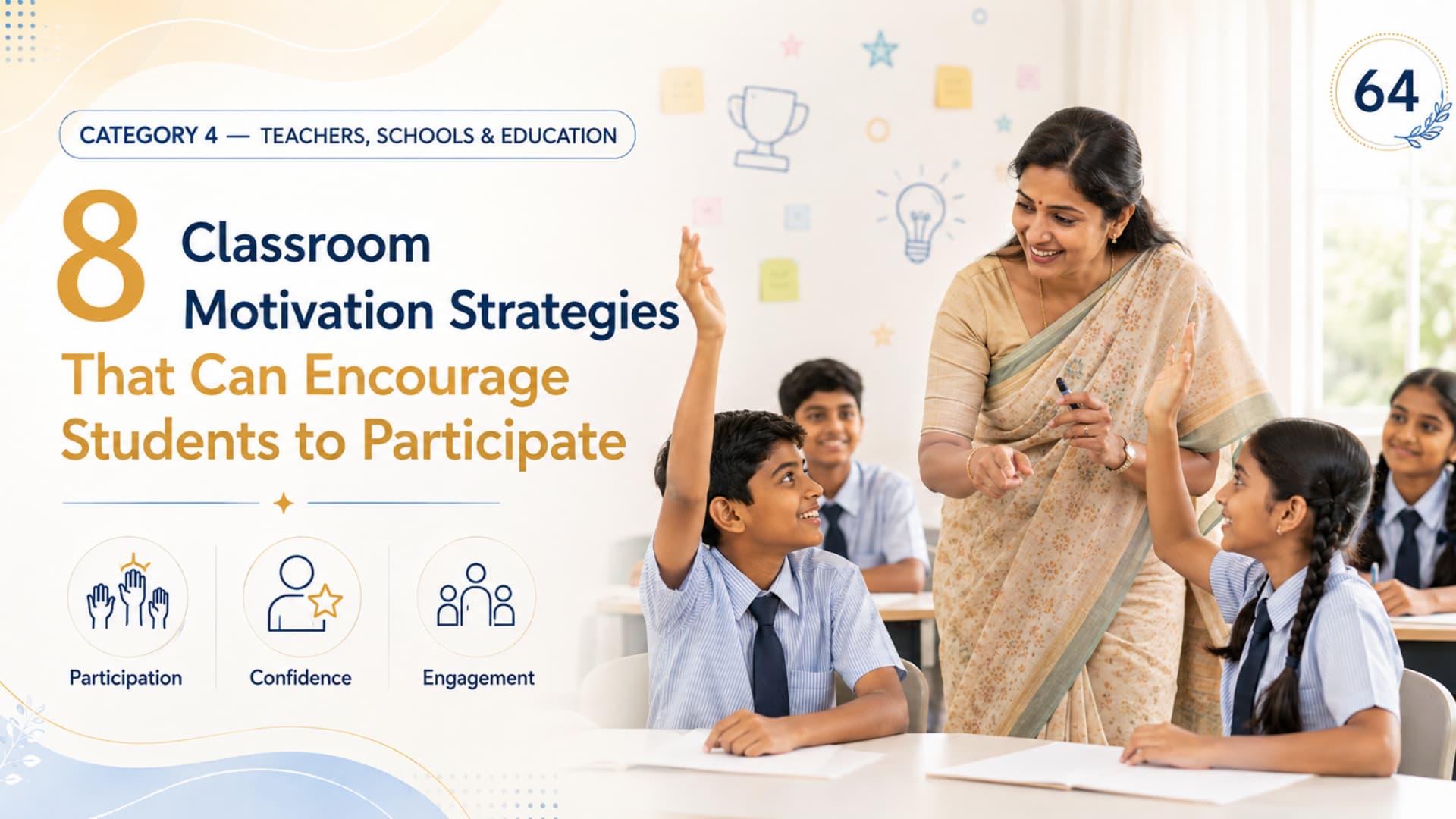
Students participate more when they feel interested, capable, included and safe to contribute.
Motivation does not come only from rewards or marks. It also grows from relevance, encouragement, choice and the feeling that effort can lead to progress.
Here are 8 practical classroom motivation strategies that can encourage students to participate more actively.
________________________________________
1. Make Learning Feel Relevant
Students are more interested when they understand why a topic matters.
Connect lessons with:
• Daily life
• Future careers
• Real problems
• Technology
• Personal interests
Why It Helps
Relevance gives students a reason to care.
Teaching Rule
Show the purpose before expecting participation.
________________________________________
2. Ask Questions Everyone Can Enter
If every question feels difficult, some students may stop trying.
Begin with accessible questions and gradually increase the challenge.
For example:
What do you notice?
What do you think?
Why might this happen?
Why It Helps
Small early successes build confidence.
Classroom Strategy
Easy entry → Deeper thinking → Stronger participation
________________________________________
3. Give Students Thinking Time
Do not always expect instant answers.
After asking a question, give students a few seconds to think.
You can also use:
Think → Pair → Share
Why It Helps
Students who need more processing time get a fairer chance to participate.
Teacher Reminder
Fast answers are not always the best answers.
________________________________________
4. Recognise Effort, Not Only Correct Answers
If praise is given only for perfect answers, some students may become afraid of being wrong.
Recognise:
• Thoughtful attempts
• Good questions
• Improvement
• Persistence
• Creative approaches
Why It Helps
Students learn that participation itself has value.
Classroom Mindset
Effort deserves attention. Mistakes can lead to learning.
________________________________________
5. Offer Small Choices
Allow students some control over how they participate.
For example:
• Work individually or with a partner
• Write or present
• Choose between two tasks
• Select an example or topic
Why It Helps
Choice creates a sense of ownership.
Students are often more motivated when they feel involved in the learning process.
________________________________________
6. Create Opportunities for Small Wins
Large tasks can feel intimidating.
Break them into achievable steps.
For example:
Complete one question → Check → Improve → Continue
Why It Helps
Progress becomes visible.
Each small success can strengthen confidence and willingness to continue.
Motivation Loop
Attempt → Progress → Confidence → Participation
________________________________________
7. Build a Safe Classroom Culture
Students are less likely to participate if they fear embarrassment.
Create an environment where:
• Questions are welcomed
• Different ideas are respected
• Mistakes are discussed constructively
• Students listen to one another
• Ridicule is not tolerated
Why It Matters
Psychological safety supports participation.
Teaching Principle
Students speak more freely when they feel safe to be imperfect.
________________________________________
8. End With Positive Reflection
At the end of the lesson, ask:
• What did you contribute today?
• What did you understand better?
• What was challenging?
• What would you like to try next?
Why It Helps
Reflection helps students notice their own progress.
It also encourages them to see participation as part of learning.
Classroom Routine
Participate → Reflect → Improve
________________________________________
The MOTIVATE Formula
M — Make Learning Relevant
Connect lessons with real life.
O — Offer Choices
Give students ownership.
T — Think Before Responding
Allow processing time.
I — Include Every Learner
Create accessible entry points.
V — Value Effort
Recognise participation and progress.
A — Allow Mistakes
Build a safe learning culture.
T — Track Small Wins
Help students see improvement.
E — Encourage Reflection
Let learners recognise growth.
________________________________________
Key Takeaway
Student motivation cannot be forced.
But teachers can create conditions that make participation more likely.
Use:
Relevance • Choice • Thinking Time • Encouragement • Small Wins • Safety • Reflection
Students participate more when they believe their effort matters and their voice is valued.
Brain Gurukul Perspective
At Brain Gurukul, we believe motivation grows when learners feel connected, capable and actively involved in the learning process.
Teachers can strengthen participation by creating meaningful tasks, recognising progress and building classrooms where students feel confident to think, question and contribute.
Build confidence. Encourage participation. Make learning active.
Read. Learn. Apply. Grow.
________________________________________
Blog Number: 64
Blog Name: 8 Classroom Motivation Strategies That Can Encourage Students to Participate
Word Count: ~750 words
Student Motivation • Classroom Participation • Teaching Strategies • Student Engagement • Education