Parenting & Child Development
7 Ways to Prepare Your Child Today for Careers That May Exist Tomorrow
Future Careers • Future-Ready Skills • Parenting • Career Readiness • Child Development
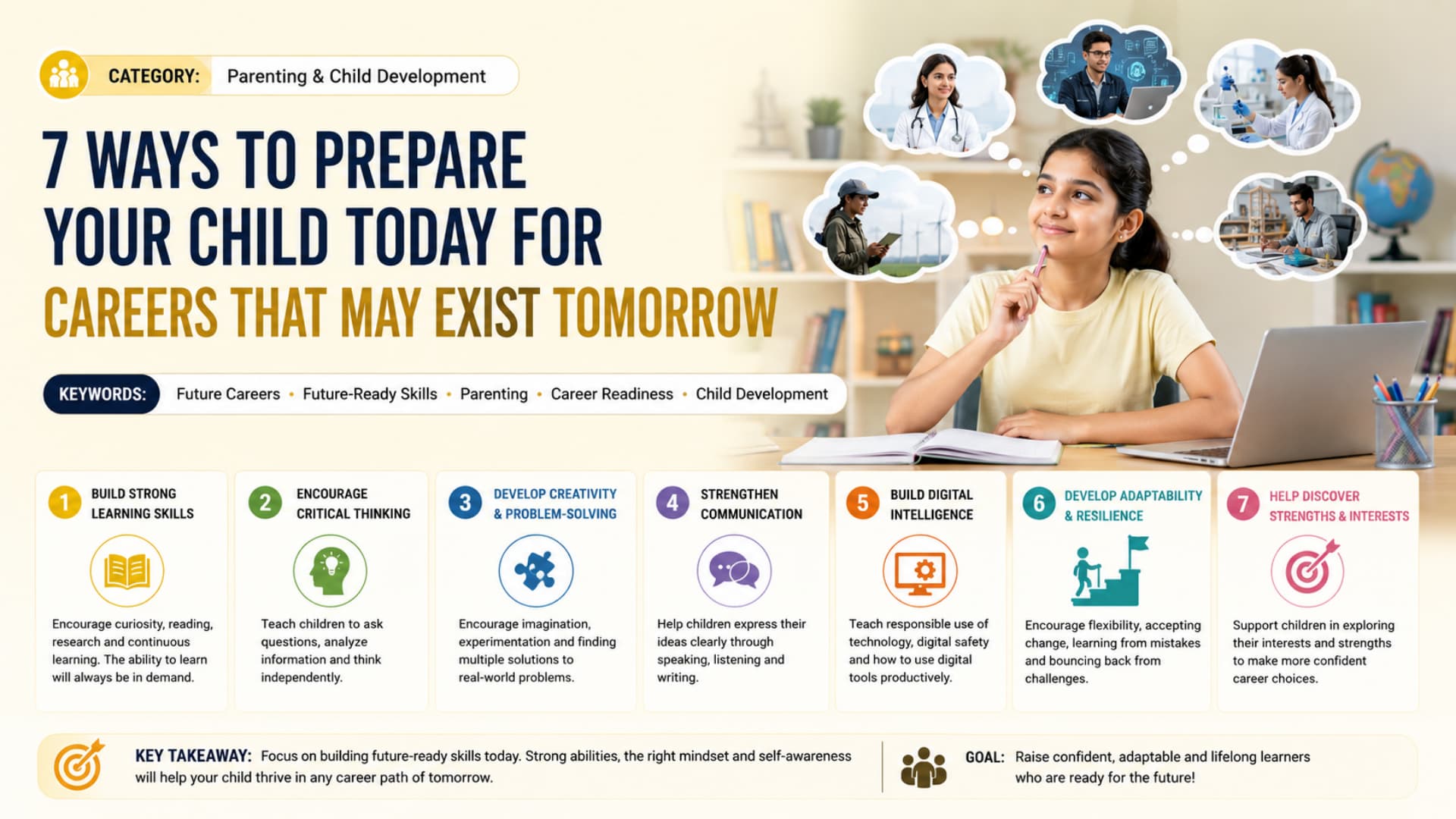
The world of work is changing quickly.
Many careers children may enter in the future could look very different from the jobs we know today. New technologies, automation, artificial intelligence, sustainability and global connectivity are already changing how people work.
So parents face an important question:
How do we prepare children for careers we cannot fully predict yet?
The answer is not to guess one perfect profession.
It is to build strong, transferable skills that remain useful across many careers.
Here are 7 ways parents can prepare children today for the opportunities of tomorrow.
________________________________________
1. Build Strong Learning Skills
Future careers will continue to evolve.
That means children need to become good at learning new things, not only completing current schoolwork.
Encourage skills such as:
• Reading
• Memory
• Comprehension
• Research
• Note-making
• Independent learning
Why It Matters
The ability to learn quickly can become a major career advantage.
Instead of asking only:
“What did you learn today?”
also ask:
“How did you learn it?”
________________________________________
2. Encourage Critical Thinking
Children will increasingly need to evaluate information rather than simply accept it.
Critical thinking helps them ask:
• Is this information reliable?
• What evidence supports it?
• Is there another viewpoint?
• What could happen next?
Build It at Home
Discuss news, advertisements, real-life problems or everyday decisions.
Ask children:
“Why do you think that?”
or
“What evidence would change your opinion?”
Why It Matters
Future professionals will need to separate useful information from noise.
Information is everywhere. Good judgement is more valuable.
________________________________________
3. Develop Creativity and Problem-Solving
Technology can automate many routine tasks.
Human creativity remains valuable because it helps people imagine possibilities and solve unfamiliar problems.
Give children opportunities to:
• Design
• Build
• Draw
• Experiment
• Create stories
• Solve puzzles
• Find multiple solutions
Parent Tip
Do not always provide the answer immediately.
Ask:
“What else could work?”
That one question encourages flexible thinking.
________________________________________
4. Strengthen Communication Skills
An excellent idea has limited impact if a person cannot communicate it clearly.
Children should gradually become comfortable with:
• Speaking
• Listening
• Writing
• Presenting
• Asking questions
• Explaining ideas
Why It Matters
Almost every career involves working with people in some form.
Encourage family discussions, storytelling, presentations and meaningful conversations.
Future Skill
Think clearly. Communicate clearly.
________________________________________
5. Build Digital Intelligence, Not Just Digital Usage
Children may be comfortable using technology—but that does not automatically mean they use it intelligently.
Teach them to understand:
• Online safety
• Digital privacy
• Responsible AI use
• Reliable sources
• Healthy screen habits
• Productive digital tools
Why It Matters
Future readiness requires more than knowing how to operate devices.
Children need to know when, why and how technology should be used.
Technology should become a tool for creation and learning—not only consumption.
________________________________________
6. Develop Adaptability and Resilience
Future careers may involve changing industries, technologies and roles several times.
Children therefore need to become comfortable with learning, change and occasional failure.
Encourage Them To
• Try new activities
• Accept feedback
• Recover from mistakes
• Adapt plans
• Learn unfamiliar skills
• Continue after setbacks
Why It Matters
Resilience does not mean never feeling disappointed.
It means learning how to move forward after difficulty.
Parent Message
“You may not know how yet—but you can learn.”
________________________________________
7. Help Children Discover Strengths and Interests
Preparing for future careers does not mean choosing a profession at age ten.
It means gradually helping children understand themselves.
Observe:
• What interests them?
• What problems do they enjoy solving?
• What activities hold their attention?
• What skills come naturally?
• What abilities are improving?
Why It Matters
Self-awareness can help children make better choices later.
Career planning becomes more meaningful when it connects:
Strengths + Interests + Skills + Opportunities
________________________________________
The FUTURE Formula
F — Focus on Learning Skills
Help children learn how to learn.
U — Understand Strengths
Discover interests and abilities.
T — Think Critically
Question and evaluate information.
U — Use Technology Wisely
Become digitally intelligent.
R — Respond to Change
Build adaptability and resilience.
E — Express Ideas Clearly
Strengthen communication.
________________________________________
Key Takeaway
Parents cannot predict every career that will exist in the future.
But they can help children prepare for uncertainty.
Focus less on:
“Which job should my child choose?”
and more on:
“What abilities will help my child succeed in many possible futures?”
Build strong learners who can think, communicate, create, adapt and keep learning.
Brain Gurukul Perspective
At Brain Gurukul, we believe future readiness begins long before career selection.
The goal is to help children discover their potential, develop future-ready abilities and gradually design a path that matches their strengths and opportunities.
Don't prepare children for one job. Prepare them for a lifetime of possibilities.
Read. Learn. Apply. Grow.
________________________________________
Blog Number: 29
Blog Name: 7 Ways to Prepare Your Child Today for Careers That May Exist Tomorrow
Word Count: ~790 words
Future Careers • Future-Ready Skills • Parenting • Career Readiness • Child Development