Teachers, Schools & Education
7 Ways Teachers Can Improve Student Attention and Classroom Engagement
Student Attention • Classroom Engagement • Teaching Strategies • Focus • Education
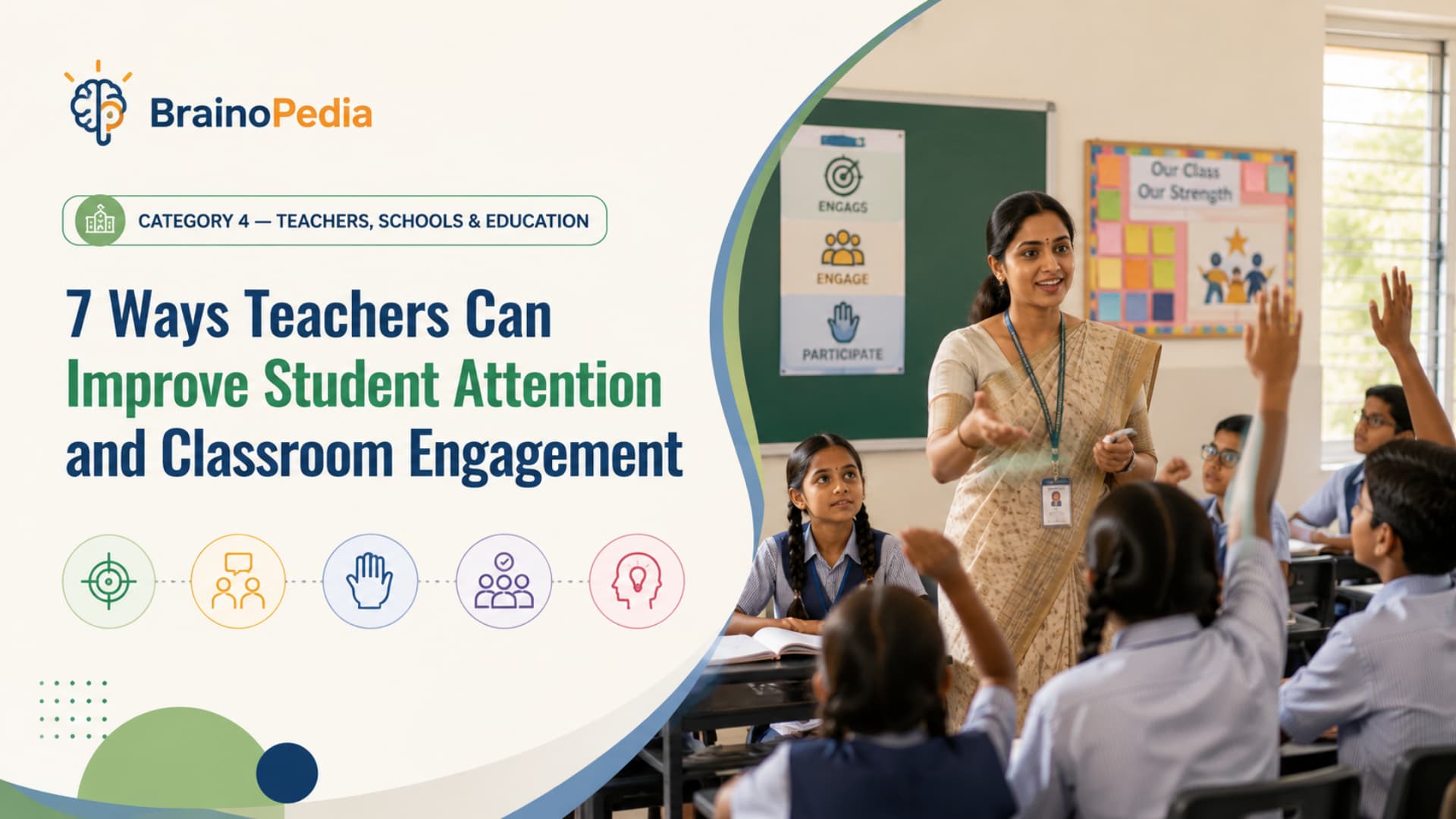
Attention is the starting point of learning.
If students are physically present but mentally distracted, even a well-planned lesson may not create meaningful learning.
Teachers cannot control every distraction, but they can design lessons that make it easier for students to focus, participate and stay mentally involved.
Here are 7 practical ways teachers can improve student attention and classroom engagement.
________________________________________
1. Start With a Strong Attention Grabber
The first few minutes of a lesson matter.
Begin with something that creates curiosity:
• A surprising question
• A real-life problem
• A short story
• A visual
• A quick challenge
Why It Helps
A strong opening gives students a reason to pay attention.
Teaching Rule
Capture attention before delivering information.
________________________________________
2. Keep Explanations Short and Focused
Long explanations can reduce attention.
Break teaching into smaller parts.
For example:
Explain → Ask → Demonstrate → Practise
Why It Helps
Shorter teaching blocks keep students mentally active.
Classroom Tip
Do not speak for too long without giving students something to think about or do.
________________________________________
3. Change the Learning Mode
Attention often drops when the same activity continues for too long.
Change the format.
Move between:
• Listening
• Writing
• Discussion
• Questioning
• Visuals
• Demonstration
• Short activities
Why It Helps
Variety creates a natural reset for attention.
Teaching Principle
Change the activity before attention disappears.
________________________________________
4. Ask Students to Participate Frequently
Participation keeps students mentally involved.
Use:
• Quick questions
• Hand signals
• Pair discussion
• Mini quizzes
• One-minute responses
• Student explanations
Why It Helps
Students are more likely to focus when they know they may need to respond.
Engagement Loop
Listen → Think → Respond → Check
________________________________________
5. Reduce Unnecessary Distractions
The classroom environment also affects attention.
Where possible:
• Keep instructions clear
• Avoid visual clutter
• Organise materials before the lesson
• Manage unnecessary noise
• Set clear expectations for device use
Why It Matters
Every unnecessary distraction competes with the lesson.
Classroom Rule
Make the important thing easy to notice.
________________________________________
6. Use Movement and Short Breaks Wisely
Students, especially younger learners, may struggle to remain focused for long periods.
Short movement opportunities can help reset attention.
Try:
• Stretching
• Moving into groups
• Standing responses
• Quick classroom tasks
• Brief learning breaks
Why It Helps
A small change in physical activity can restore alertness.
Teacher Reminder
Movement should support the lesson, not interrupt it.
________________________________________
7. Check Engagement Before Moving On
Do not assume students understand because they are quiet.
Pause and check.
Ask:
• What is the main idea?
• Can someone explain this?
• What question do you have?
• Which part was difficult?
• Show your answer.
Why It Helps
These checks tell the teacher whether attention and understanding are still present.
Teaching Loop
Teach → Check → Adjust → Continue
________________________________________
The FOCUS Formula
F — Focus the Start
Begin with curiosity.
O — Offer Participation
Give students ways to respond.
C — Change the Mode
Use varied learning activities.
U — Use Clear Structure
Reduce confusion and distractions.
S — Scan for Engagement
Check attention before moving ahead.
________________________________________
Key Takeaway
Student attention cannot be demanded continuously.
It has to be supported through good classroom design.
Use:
Strong Openings • Short Explanations • Variety • Participation • Clear Environments • Movement • Engagement Checks
Attention grows when students have a reason to think, respond and participate.
Brain Gurukul Perspective
At Brain Gurukul, focus and concentration are important foundations for effective learning.
Teachers can strengthen attention by designing lessons that are clear, interactive and appropriately paced.
When students remain mentally involved, they are more likely to understand, remember and apply what they learn.
Capture attention. Activate participation. Strengthen learning.
Read. Learn. Apply. Grow.
________________________________________
Blog Number: 70
Blog Name: 7 Ways Teachers Can Improve Student Attention and Classroom Engagement
Word Count: ~745 words
Student Attention • Classroom Engagement • Teaching Strategies • Focus • Education