
Parenting & Child Development
7 Study Habits Parents Can Build at Home for Better Learning
Study Habits • Parenting • Home Learning • Student Success • Child Development
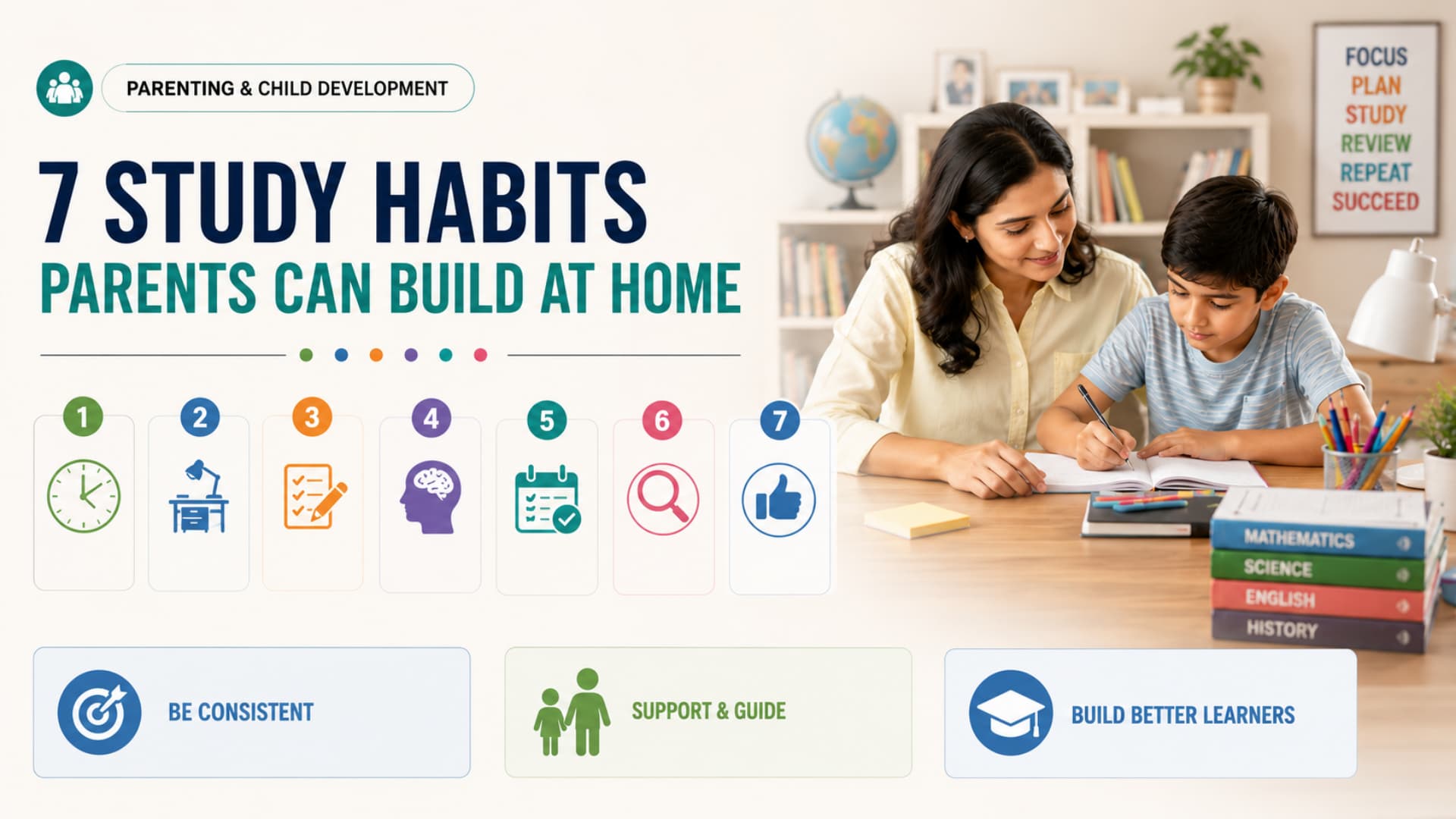
A child’s study routine is shaped not only by school.
Home plays a major role too.
The way study time is organised, how parents respond to mistakes, how distractions are managed, and how regularly learning is reviewed can all influence a child’s academic habits.
The goal is not to turn home into another classroom.
It is to create a calm, structured and supportive learning environment.
Here are 7 study habits parents can build at home for better learning.
________________________________________
1. Create a Fixed Study Time
Children often find it easier to begin when study time follows a regular routine.
For example:
5:00–5:30 PM → Homework
5:30–5:40 PM → Break
5:40–6:10 PM → Revision
Why It Matters
A predictable schedule reduces daily negotiation.
The child begins to understand:
“This is my learning time.”
The exact timing can vary depending on school, activities and energy levels.
Consistency matters more than perfection.
________________________________________
2. Create a Simple Study Space
A good study area does not need expensive furniture.
It should mainly reduce distraction.
Keep:
• Books
• Notebook
• Pen
• Water
• Required device
Remove unnecessary:
• Toys
• Television
• Extra screens
• Phone notifications
Parent Tip
Try to use the same place regularly.
Over time, the environment itself can become associated with focused learning.
Simple spaces often support better concentration.
________________________________________
3. Break Large Tasks Into Smaller Goals
A large chapter or assignment can feel overwhelming.
Instead of saying:
“Finish the whole chapter.”
break it down.
For example:
1. Read two pages.
2. Understand one concept.
3. Write five key points.
4. Solve five questions.
5. Review mistakes.
Why It Matters
Small goals create visible progress.
Children can focus better when they know exactly what needs to be completed next.
Study Rule
Small target → Complete → Move forward
________________________________________
4. Encourage Active Recall
Many children study by reading the same material repeatedly.
A stronger habit is to ask them to remember without looking.
After a section, say:
“Close the book. Tell me what you remember.”
Then ask:
• What were the main points?
• Can you explain them?
• What did you forget?
• Can you answer one question?
Why It Matters
Active recall turns studying into an active process.
Use:
Read → Close → Recall → Check
This simple habit can make revision much more effective.
________________________________________
5. Build Short Revision Into the Week
Waiting until the night before an exam creates unnecessary pressure.
Parents can help children develop regular revision habits.
Try:
Monday: Learn
Tuesday: Quick review
Thursday: Recall again
Weekend: Short self-test
Why It Matters
Regular revision helps the learner revisit information before it becomes difficult to recall.
Parent Tip
Revision does not always need to be long.
Even 10–15 focused minutes can be useful.
Review regularly instead of cramming occasionally.
________________________________________
6. Teach Children to Check Their Own Work
Parents often correct every mistake themselves.
But children should gradually learn to review their own work.
Before checking it for them, ask:
• Have you read the answer again?
• Did you check the calculation?
• Does the answer make sense?
• Is anything missing?
Why It Matters
Self-checking develops:
Responsibility • Attention • Independence • Self-Monitoring
The aim is to move slowly from:
“Parent checks everything”
to:
“Child learns to check independently.”
________________________________________
7. End Study Time Positively
How a study session ends can influence how the child feels about the next one.
Instead of finishing with criticism:
“You wasted so much time today.”
try reflecting on progress:
“You finished the difficult section today. Tomorrow we’ll work on the next part.”
Why It Matters
Positive closure does not mean ignoring weak performance.
It means separating improvement from unnecessary negativity.
Parents can discuss:
• What went well
• What was difficult
• What needs revision
• What the child will do next
Learning Tip
End with direction—not frustration.
________________________________________
The STUDY Formula
S — Set a Routine
Create predictable study time.
T — Tidy the Environment
Reduce distractions.
U — Use Small Goals
Break work into manageable steps.
D — Develop Recall
Ask children to retrieve what they learned.
Y — Year-Round Revision
Review consistently, not only before exams.
________________________________________
Key Takeaway
Strong study habits are built through daily routines, not last-minute pressure.
Parents can support better learning by creating:
Structure • Focus • Small Goals • Recall • Revision • Independence
The goal is not to sit beside the child forever.
It is to gradually help the child become capable of managing learning independently.
Brain Gurukul Perspective
At Brain Gurukul, we believe the best learning routine is one that gradually develops independence, focus and responsibility.
Build the right habits at home today—and create a stronger learner for tomorrow.
Read. Learn. Apply. Grow.
________________________________________
Blog Number: 25
Blog Name: 7 Study Habits Parents Can Build at Home for Better Learning
Word Count: ~780 words
Study Habits • Parenting • Home Learning • Student Success • Child Development