Parenting & Child Development
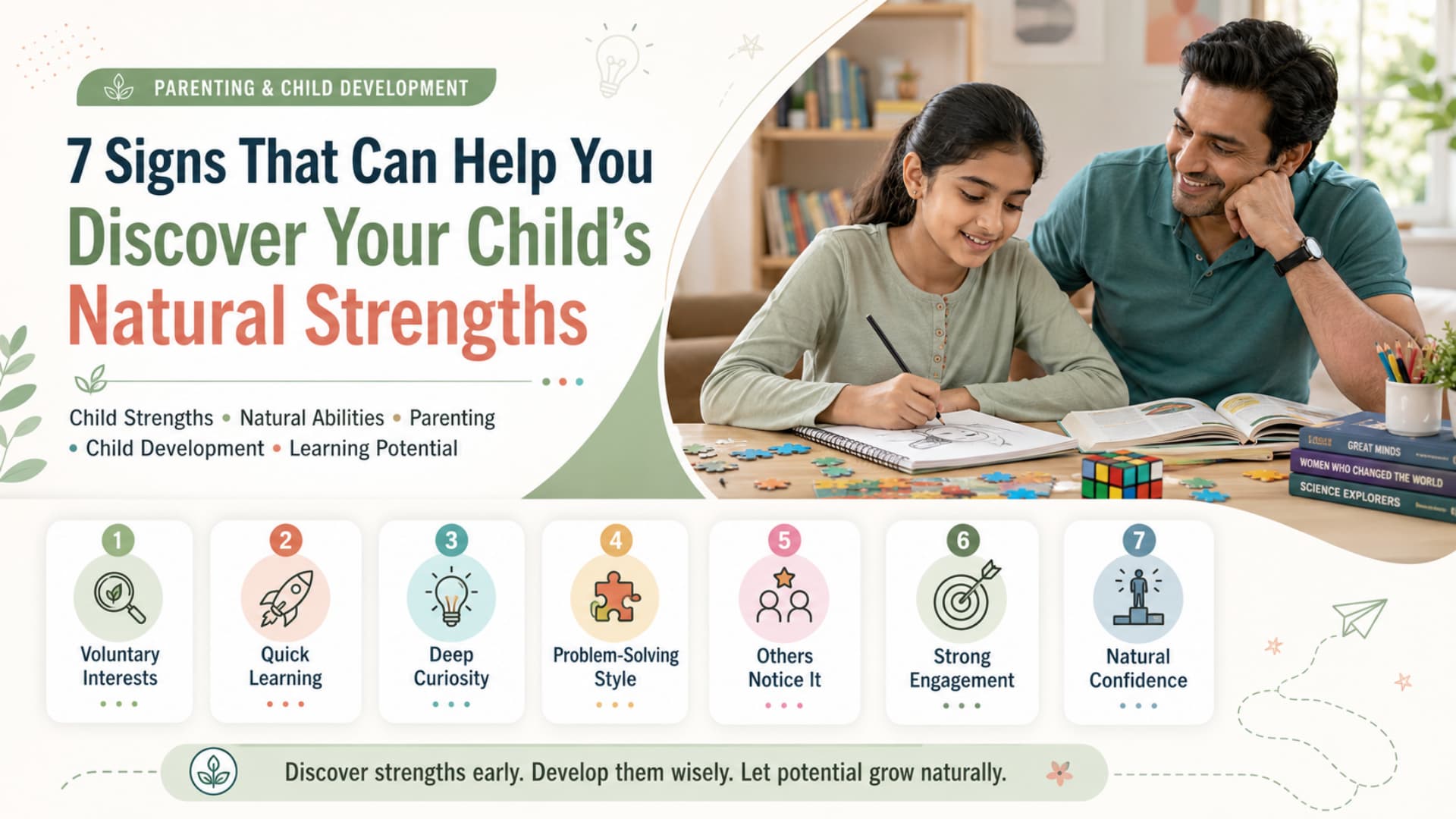
7 Signs That Can Help You Discover Your Child’s Natural Strengths
Child Strengths • Natural Abilities • Parenting • Child Development • Learning Potential
Every child has strengths.
But those strengths do not always appear through marks.
Some children show them through curiosity. Others through communication, creativity, observation, leadership, problem-solving, movement or persistence.
The challenge for parents is not to decide too early:
“My child is good at this.”
The better approach is to observe patterns over time.
Here are 7 signs that can help you discover your child’s natural strengths more clearly.
________________________________________
1. Notice What Your Child Chooses Without Being Asked
Children often reveal interests through the activities they naturally return to.
One child may repeatedly:
• Draw
• Build
• Read
• Organise
• Explain
• Perform
• Experiment
• Solve puzzles
Why It Matters
Repeated voluntary interest can indicate an area worth exploring further.
It does not automatically mean a future career.
But it gives parents an important clue.
Parent Tip
Ask:
“What does my child choose when nobody is telling them what to do?”
________________________________________
2. Watch What They Learn Quickly
Children often show stronger ability in areas where they understand patterns faster.
For example, a child may:
• Remember stories easily
• Learn calculations quickly
• Pick up pronunciation
• Understand technology
• Notice visual details
• Coordinate movement naturally
Why It Matters
Fast learning can sometimes point toward a natural advantage.
But do not ignore skills that improve through effort.
Natural ease and developed skill can both become strengths.
Observe both talent and growth.
________________________________________
3. Notice What Makes Them Deeply Curious
Curiosity is a powerful signal.
Some children constantly ask:
Why?
How?
What happens if...?
Others may explore one subject in unusual depth.
They may become fascinated by:
• Space
• Animals
• Machines
• History
• Art
• Computers
• Human behaviour
• Nature
Why It Matters
Curiosity creates self-driven learning.
When children genuinely want to know more, they often stay engaged longer and learn more deeply.
Parent Tip
Do not dismiss repeated questions.
They may reveal the direction of genuine interest.
________________________________________
4. Observe How They Solve Problems
Strengths often appear when children face a challenge.
One child may think logically.
Another may create an unusual solution.
Another may ask for information.
Another may organise people and resources.
Watch For
• Analytical thinking
• Creativity
• Persistence
• Practical judgement
• Communication
• Leadership
Why It Matters
Problem-solving reveals how the child thinks, not just what the child knows.
Sometimes the process tells you more than the final answer.
________________________________________
5. Listen to What Others Notice
Parents see one side of a child.
Teachers, coaches and relatives may see another.
A teacher may notice:
“She explains ideas very clearly.”
A sports coach may notice:
“He understands team strategy quickly.”
A music teacher may observe unusual rhythm or listening ability.
Why It Matters
Patterns noticed by several people can provide useful clues.
Parent Tip
Ask teachers:
“Where do you see my child naturally engaging or performing well?”
Don't ask only about weaknesses.
________________________________________
6. Look for Activities That Create Deep Engagement
Sometimes children become so engaged that they lose track of time.
They may spend long periods:
• Drawing
• Building models
• Reading
• Designing
• Playing music
• Solving problems
• Writing stories
• Exploring technology
Why It Matters
Deep engagement can indicate a strong combination of interest and ability.
That area deserves opportunities for further exploration.
Remember
A strength grows when it receives:
Exposure + Practice + Feedback + Opportunity
________________________________________
7. Notice Where Confidence Appears Naturally
Children often behave differently when they feel competent.
You may notice that your child becomes more:
• Expressive
• Independent
• Persistent
• Enthusiastic
• Willing to lead
• Willing to teach others
in particular activities.
Why It Matters
Confidence may signal that the child feels capable in that area.
But avoid turning the strength into pressure.
A child who enjoys art should not immediately feel:
“Now I must become an artist.”
Let strengths remain spaces for exploration before turning them into expectations.
________________________________________
The STRENGTH Formula
S — See What They Choose
Observe voluntary interests.
T — Track Fast Learning
Notice areas of natural ease.
R — Recognise Curiosity
Pay attention to repeated questions.
E — Examine Problem-Solving
Watch how the child thinks.
N — Notice Other Perspectives
Ask teachers and mentors.
G — Give Opportunities
Create experiences to explore strengths.
T — Track Engagement
Notice sustained interest.
H — Help Without Pressure
Support development without forcing outcomes.
________________________________________
Key Takeaway
Discovering a child's strengths is not about labelling them early.
It is about observing patterns.
Look for:
Interest • Curiosity • Ease • Engagement • Confidence • Problem-Solving • Persistence
Then give the child opportunities to explore those abilities further.
The goal is not to decide the child's entire future.
It is to help them understand themselves better.
Brain Gurukul Perspective
At Brain Gurukul, we believe every child has a unique combination of abilities and potential.
The first step in development is often discovery—understanding what the learner naturally enjoys, where strengths appear, and which abilities deserve further nurturing.
Discover strengths early. Develop them wisely. Let potential grow naturally.
Read. Learn. Apply. Grow.
________________________________________
Blog Number: 31
Blog Name: 7 Signs That Can Help You Discover Your Child’s Natural Strengths
Word Count: ~790 words
Child Strengths • Natural Abilities • Parenting • Child Development • Learning Potential