Education Entrepreneurship & Franchise
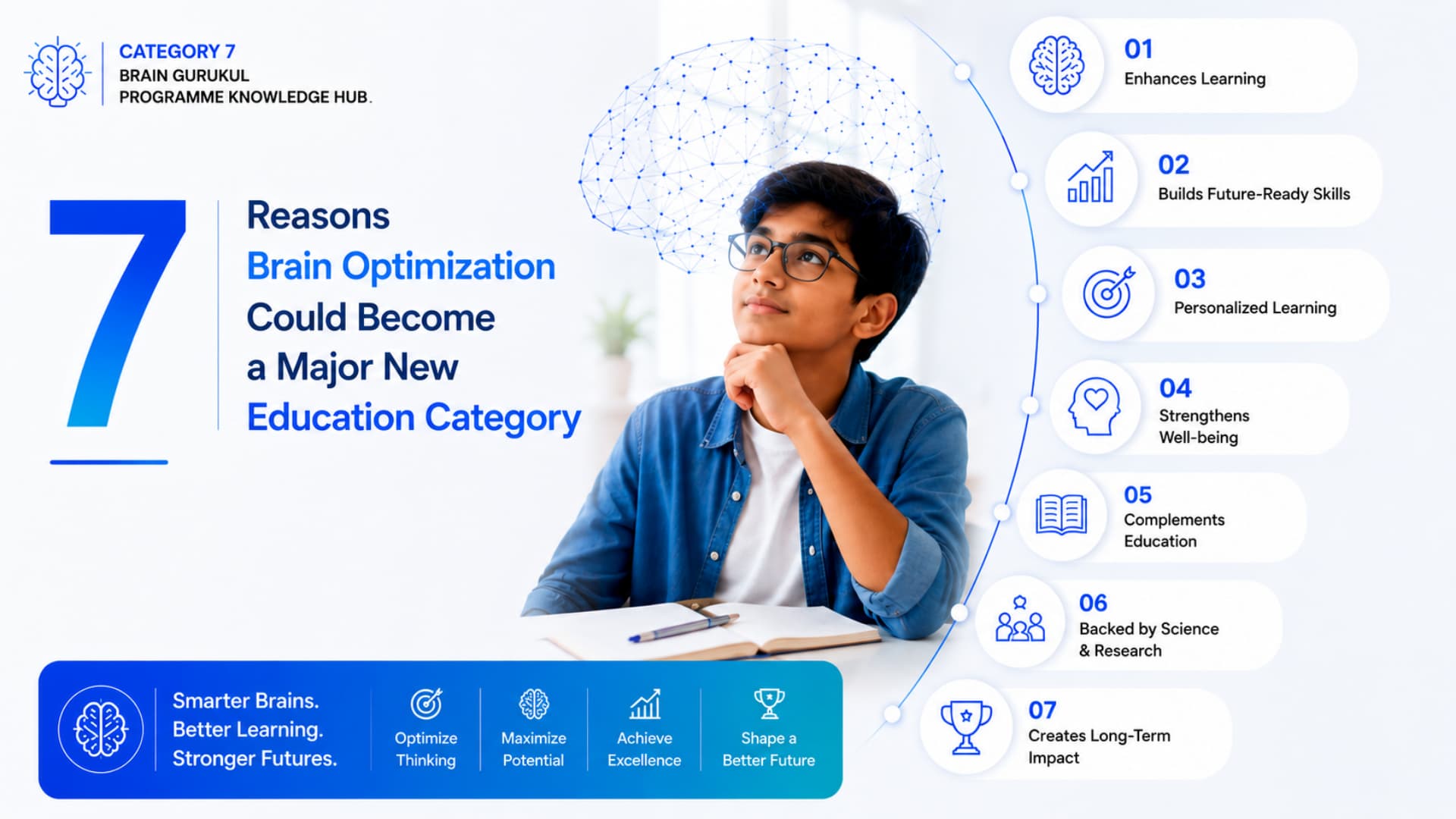
7 Reasons Brain Optimization Could Become a Major New Education Category
Brain Optimization • Education Category • Skill Development • Learning Innovation • Education Entrepreneurship
Education categories evolve when new learner needs become important enough to create sustained demand.
For years, parents primarily looked toward schools, tuition, test preparation and activity classes.
Today, many families are also becoming concerned about focus, memory, learning speed, comprehension, confidence, thinking ability and future-ready skills.
This creates space for a broader category focused not only on what students learn, but on how effectively they learn and perform.
Here are 7 reasons brain optimization could develop into a major new education category.
________________________________________
1. Parents Are Looking Beyond Marks
Academic performance remains important.
But many parents increasingly ask questions such as:
• Why does my child forget quickly?
• Why is concentration weak?
• Why does studying take so long?
• Why does confidence remain low?
• How can my child become a better learner?
Why It Matters
These concerns are not always solved through additional subject tuition.
They create demand for programmes focused on the learner’s underlying abilities.
Category Shift
From teaching more content → toward strengthening learning capability.
________________________________________
2. Learning Skills Are Becoming More Valuable
Modern education increasingly values abilities such as:
• Critical thinking
• Communication
• Creativity
• Problem-solving
• Learning agility
• Emotional intelligence
• Adaptability
Why It Matters
These abilities cut across subjects.
A learner who becomes better at focusing, understanding, remembering and applying knowledge may benefit across many areas.
Education Principle
Better learning abilities can support better learning outcomes.
________________________________________
3. Traditional Tuition Covers Only Part of the Need
Tuition generally helps students with specific academic subjects.
Brain optimization represents a different proposition.
It can focus on areas such as:
• Memory
• Concentration
• Reading efficiency
• Mental calculation
• Observation
• Comprehension
• Learning strategies
Why It Matters
This creates a distinct positioning rather than another version of tuition.
Business Opportunity
New categories grow when they solve needs existing categories do not fully address.
________________________________________
4. Parents Are Seeking More Holistic Development
Families increasingly want children to develop beyond academics.
They may look for programmes supporting:
• Confidence
• Communication
• Creativity
• Thinking
• Emotional intelligence
• Independent learning
Why It Helps the Category
Brain optimization can bring several interconnected abilities under one broader development framework.
Parent Perspective
The child is not one subject. Development should not be one-dimensional.
________________________________________
5. The Category Can Serve Multiple Age Groups
Brain optimization does not have to be limited only to school children.
Different programmes may be relevant for:
• Young learners
• Teenagers
• College students
• Parents
• Teachers
• Professionals
Why It Matters
A wider audience gives the category broader market potential.
It also creates opportunities for long-term learning journeys.
Business Principle
A strong category can grow across life stages, not only one age group.
________________________________________
6. It Can Support a Multi-Programme Education Ecosystem
A brain optimization academy can potentially combine different programmes within one platform.
For example:
• Assessment
• Memory development
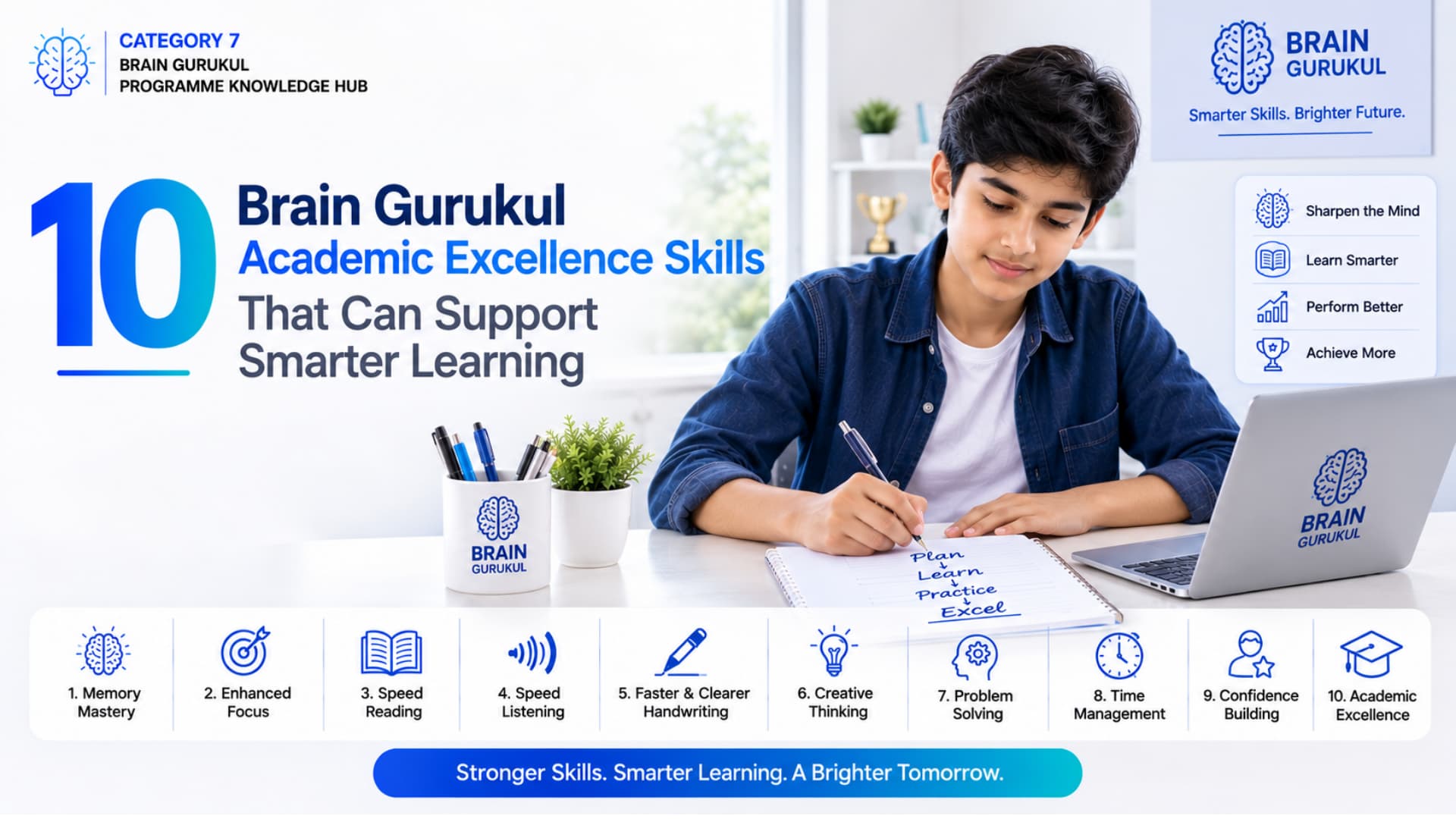
• Speed learning
• Mental calculation
• Handwriting
• Brain-based learning skills
• Personal development
Why It Matters
This allows education entrepreneurs to move away from dependence on one programme.
Growth Model
One Learner → Multiple Needs → Multiple Programmes → Longer Relationship
A broader portfolio can create a more sustainable academy ecosystem.
________________________________________
7. Future Education May Focus More on “How to Learn”
Knowledge is becoming easier to access.
The bigger challenge is increasingly:
• How to focus
• How to understand
• How to evaluate information
• How to remember
• How to learn new skills
• How to adapt
Why It Matters
As information becomes abundant, the ability to process and use information may become even more valuable.
Future Shift
From knowledge acquisition → toward learning capability.
That shift can strengthen the relevance of brain optimization as a distinct education category.
________________________________________
The CATEGORY Formula
C — Cognitive Abilities
Focus on memory, attention and thinking.
A — Ability Development
Build skills beyond academic subjects.
T — Total Learner Development
Support multiple interconnected abilities.
E — Emerging Parent Demand
Respond to changing expectations.
G — Growth Across Age Groups
Serve broader learner segments.
O — One Integrated Ecosystem
Combine multiple programmes.
R — Relevant to Future Learning
Strengthen how people learn.
Y — Year-Round Opportunity
Create ongoing development pathways.
________________________________________
Key Takeaway
Brain optimization could become a major education category because it sits at the intersection of:
Learning Skills • Cognitive Development • Future Readiness • Parent Demand • Personalised Development • Multi-Programme Education
The next major education opportunity may not be about teaching another subject—it may be about developing a better learner.
Brain Gurukul Perspective
At Brain Gurukul, brain optimization is positioned as a holistic education ecosystem built around interconnected abilities rather than one isolated course.
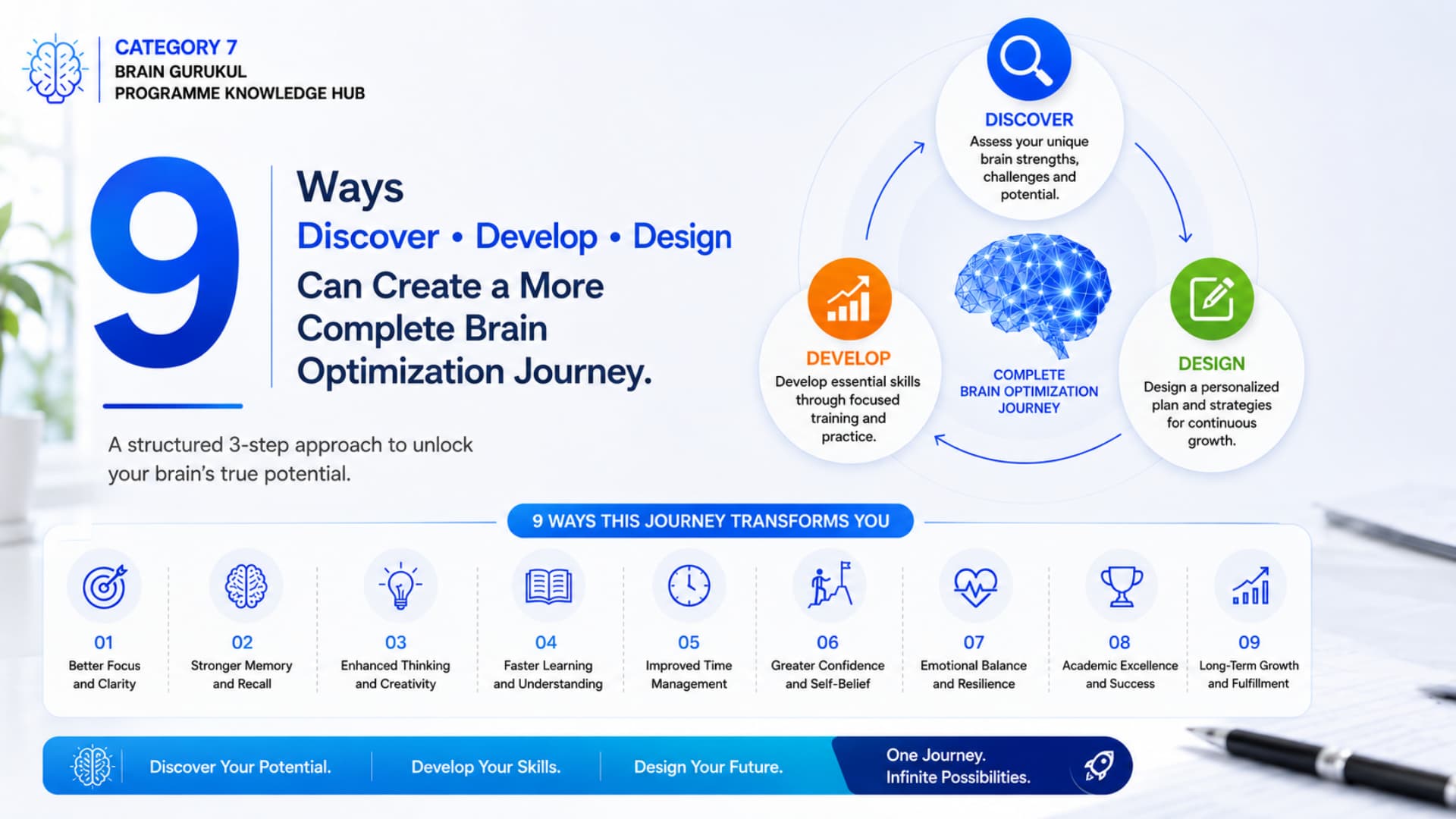
Through the DISCOVER • DEVELOP • DESIGN framework, the objective is to understand learners, strengthen capabilities and support more purposeful learning pathways.
For education entrepreneurs, this creates the possibility of building a differentiated academy around a broader intellectual-development category.
Build better learners. Create a stronger category. Shape the future of education.
Read. Learn. Apply. Grow.
________________________________________
Blog Number: 96
Blog Name: 7 Reasons Brain Optimization Could Become a Major New Education Category
Word Count: ~770 words
Brain Optimization • Education Category • Skill Development • Learning Innovation • Education Entrepreneurship