Brain Science & Brain Optimization
7 Incredible Changes That Happen in the Brain During Childhood and Adolescence
Brain Development • Childhood • Adolescence • Learning • Neuroplasticity
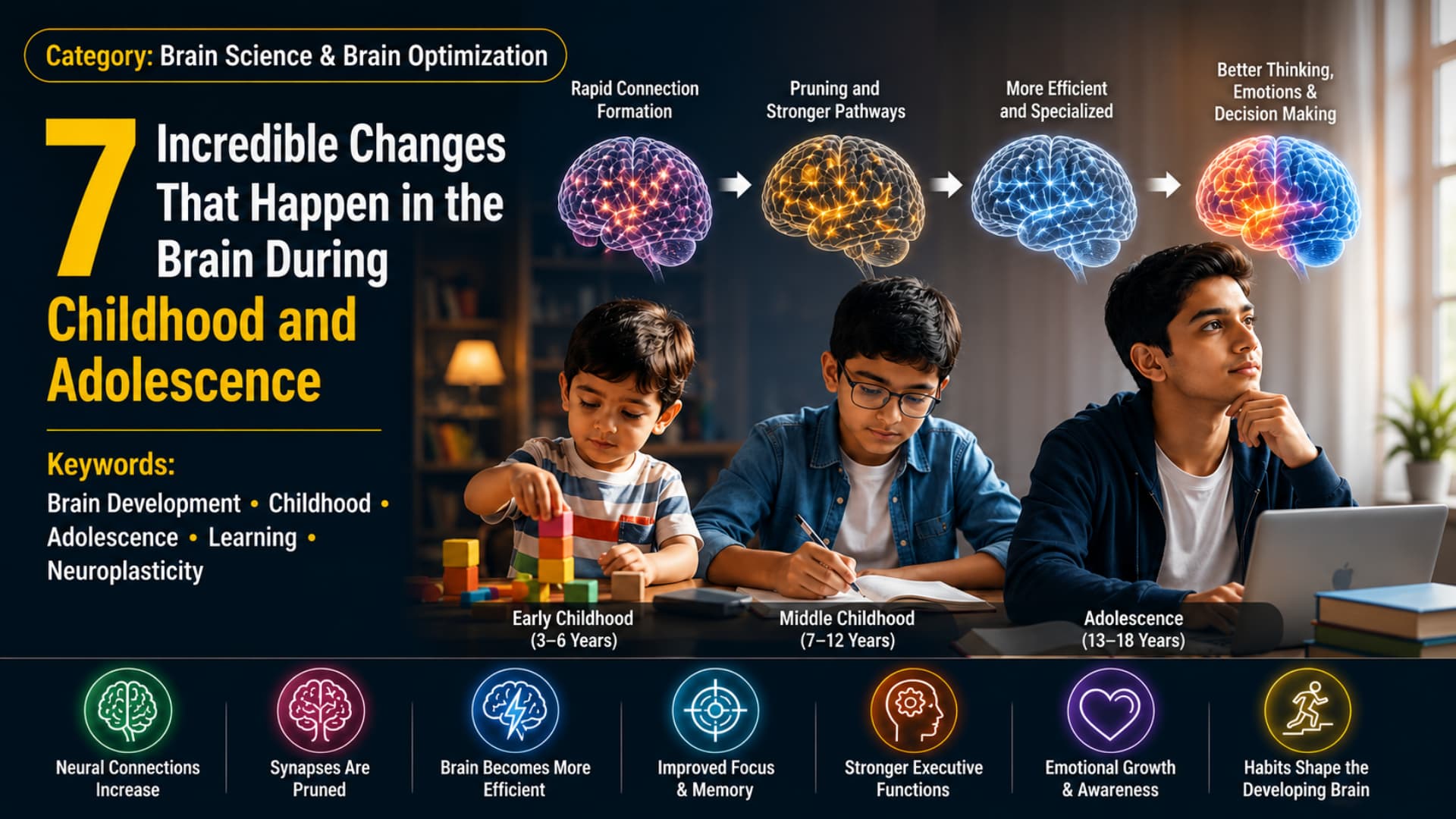
Childhood and adolescence are not just stages of physical growth.
They are also powerful periods of brain development.
During these years, the brain is constantly building, strengthening and reorganising the systems responsible for learning, memory, behaviour, emotions and decision-making.
Here are 7 incredible changes that happen in the brain during childhood and adolescence—and why they matter.
________________________________________
1. The Brain Builds Huge Numbers of Connections
During the early years, the brain rapidly creates neural connections.
These connections help children learn from:
• Sounds
• Words
• Faces
• Movement
• Emotions
• Experiences
This is one reason children learn so quickly from the environment around them.
Why It Matters
Positive interaction, play, language exposure and guided learning help create strong foundations.
Early experiences are brain-building experiences.
________________________________________
2. Unused Connections Begin to Be Pruned
The brain does not keep every connection it creates.
As children grow, frequently used pathways are strengthened while less-used connections may weaken through a process known as synaptic pruning.
Think of it as refining the brain’s network.
Why It Matters
Repeated activities such as reading, problem-solving, communication, creativity and physical skills can help strengthen useful pathways.
What we practise regularly matters.
________________________________________
3. The Brain Becomes More Efficient
As children move toward adolescence, communication between brain regions becomes increasingly organised and efficient.
This helps learners handle more complex tasks such as:
• Following instructions
• Solving problems
• Organising ideas
• Processing information
• Coordinating multiple skills
Why It Matters
A developing brain is becoming more capable—but it is still developing.
Children and teenagers should not always be expected to think or respond exactly like adults.
________________________________________
4. Attention and Memory Continue to Improve
Attention and working memory continue developing through childhood and adolescence.
Over time, learners often become better at:
• Staying focused
• Remembering instructions
• Managing multiple steps
• Understanding complex information
• Learning independently
Why It Matters
Not every child develops these abilities at the same speed.
Good routines, practice and patient guidance can support this development.
Development is a journey, not a race.
________________________________________
5. Executive Functions Grow Stronger
Executive functions are the brain’s management skills.
They include:
• Planning
• Organisation
• Self-control
• Flexible thinking
• Goal setting
• Self-monitoring
These abilities continue developing well into adolescence.
Why It Matters
A teenager may understand what needs to be done but still struggle with planning, consistency or impulse control.
That does not always mean lack of ability.
It may reflect skills that are still developing.
Practice, responsibility and structured routines can help strengthen them.
________________________________________
6. Emotional and Social Processing Becomes More Intense
Adolescence is a major stage of emotional and social development.
Teenagers often become more sensitive to:
• Peer opinions
• Rewards
• Social acceptance
• Confidence
• Emotional experiences
• Independence
This can influence motivation, behaviour and decision-making.
Why It Matters
Teenagers benefit from a combination of:
Understanding • Communication • Boundaries • Encouragement • Guidance
Strong emotions are part of development and should be managed constructively rather than simply criticised.
________________________________________
7. Habits Begin to Shape Long-Term Behaviour
Repeated routines during childhood and adolescence can influence learning patterns and behaviour.
Helpful habits may include:
• Regular reading
• Adequate sleep
• Physical activity
• Focused study
• Creative activities
• Healthy screen use
• Positive communication
Poor routines, constant distraction and irregular sleep can make learning and concentration more difficult.
Why It Matters
Daily habits gradually influence how learners think, respond and perform.
Small habits repeated over time can create big differences.
________________________________________
The GROW Formula
Remember these changes through a simple formula:
G — Generate Connections
The young brain rapidly creates pathways.
R — Refine Networks
Frequently used connections become stronger.
O — Organise Thinking
Attention, memory and executive skills improve.
W — Widen Abilities
Emotional, social and cognitive abilities continue developing.
________________________________________
Key Takeaway
The brain during childhood and adolescence is still developing, adapting and learning from experience.
These years are not only about academic marks.
They are about building foundations for:
Learning • Focus • Confidence • Behaviour • Decision-Making • Future Readiness
Brain Gurukul Perspective
At Brain Gurukul, we believe childhood and adolescence are important years for Brain Optimization.
The right experiences, habits and guidance can help learners discover their strengths and develop important intellectual and life abilities.
Support the growing brain today—and build a stronger learner for tomorrow.
Read. Learn. Apply. Grow.
(WC = 702)