Your brain works all day.
It helps you think, learn, remember, decide, communicate and solve problems.
But just like the body, the brain performs better when it receives the right support.
Good brain health is not about one magic food, one exercise or one technique. It is about a combination of everyday habits that help support attention, memory, learning and mental energy.
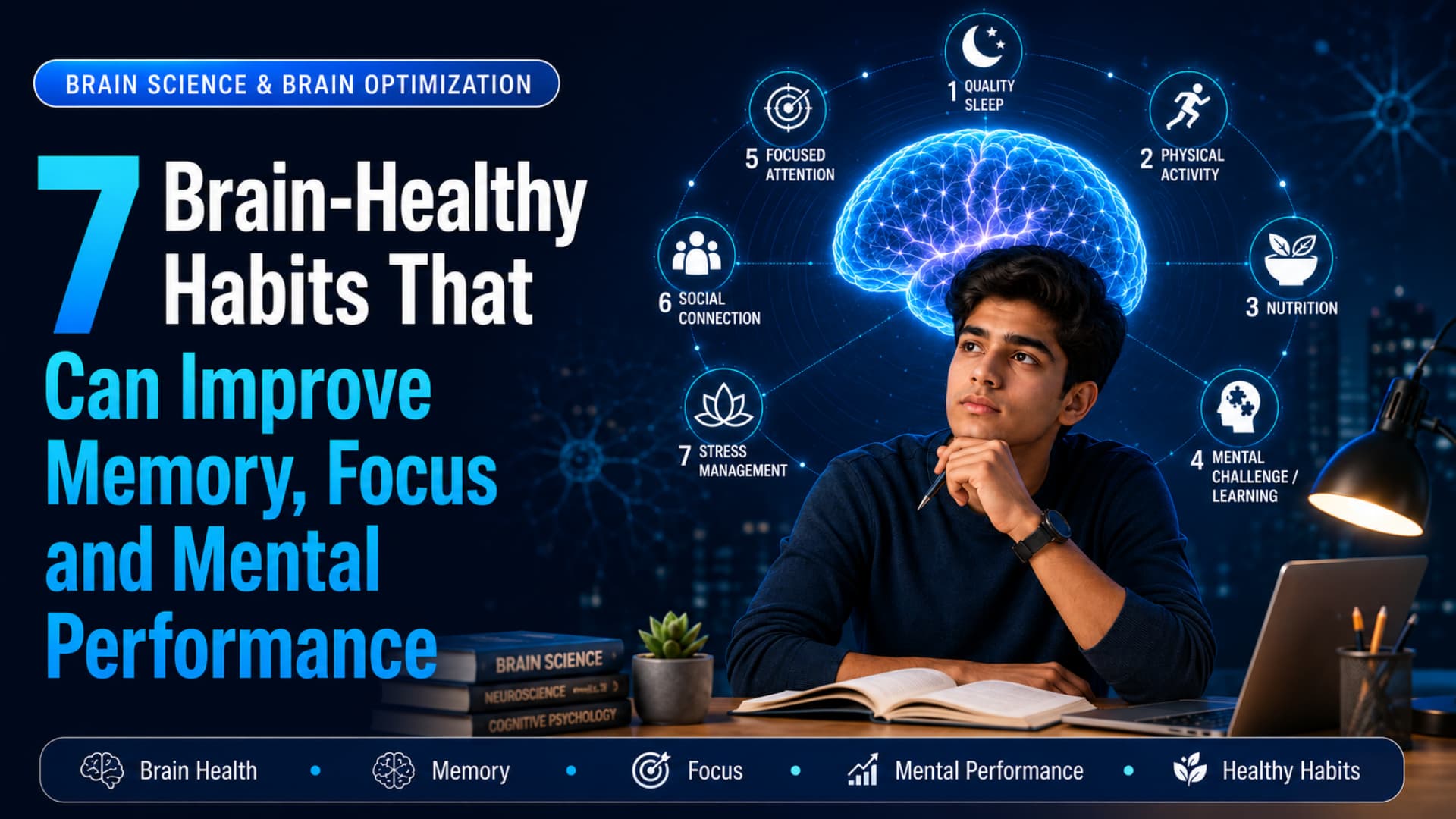
Here are 7 brain-healthy habits that can help you stay sharper, more focused and mentally active.
________________________________________
1. Protect Your Sleep
Sleep is one of the most important foundations of brain health.
During sleep, the brain continues processing information, supporting memory and preparing for the next day.
Poor sleep can make it harder to:
• Concentrate
• Remember information
• Control emotions
• Make decisions
• Stay mentally alert
Try This
Create a regular sleep schedule.
Avoid unnecessary late-night screen use and try to maintain a calm routine before bed.
Brain Rule:
Better sleep supports better learning.
________________________________________
2. Move Your Body Regularly
Physical activity is not only good for muscles and fitness.
It also supports brain health.
Walking, cycling, sports, stretching or other forms of movement can help improve energy and support overall mental performance.
Make It Simple
You do not need a complicated fitness programme.
Try:
• A brisk walk
• Outdoor games
• Cycling
• Dancing
• Yoga
• Regular sports
The goal is consistency.
A moving body supports an active brain.
________________________________________
3. Eat for Steady Energy
Your brain requires a continuous supply of energy and nutrients.
Irregular meals, excessive junk food or poor hydration can affect how energetic and focused you feel.
Build Better Habits
Include a balanced variety of:
• Fruits
• Vegetables
• Whole grains
• Protein sources
• Nuts and seeds
• Adequate water
Instead of searching for one “brain food,” focus on an overall healthy eating pattern.
Brain health depends more on good habits than miracle ingredients.
________________________________________
4. Train Your Brain With New Challenges
The brain benefits from being used.
Learning something unfamiliar challenges your thinking and creates opportunities for new learning.
Try:
• Learning a new language
• Solving puzzles
• Playing strategy games
• Learning music
• Reading unfamiliar topics
• Developing a new professional skill
The challenge should be neither too easy nor impossible.
Brain Tip
Choose activities that make you think:
“I can do this—but I need to work at it.”
That is where learning often becomes meaningful.
________________________________________
5. Practise Focused Attention
Constant distraction can make deep learning difficult.
If your attention is repeatedly divided between notifications, videos, conversations and work, the brain has fewer opportunities to focus deeply.
Create Focus Time
For 25–40 minutes:
• Choose one task
• Keep the phone away
• Remove unnecessary notifications
• Work without switching
• Take a short break afterward
Small periods of concentrated effort can be more effective than long periods of distracted work.
Protect your attention—it is one of your most valuable mental resources.
________________________________________
6. Stay Socially and Emotionally Connected
The brain does not develop and function in isolation.
Conversation, relationships, teamwork and meaningful social interaction keep us mentally and emotionally engaged.
Healthy relationships can encourage:
• Communication
• Emotional understanding
• Problem-solving
• Confidence
• New perspectives
Spend time talking, listening and sharing experiences with family, friends, colleagues or learning communities.
Remember
A healthy brain needs both stimulation and connection.
________________________________________
7. Manage Stress Before It Manages You
Some stress can motivate action.
But constant stress can make concentration, memory and clear thinking more difficult.
That is why learning how to recover is important.
Simple Stress-Management Habits
Try:
• Deep breathing
• Short walks
• Physical activity
• Quiet time
• Planning tasks in advance
• Talking with someone you trust
• Taking meaningful breaks
The goal is not to eliminate every stressful situation.
It is to build better ways of responding to them.
________________________________________
The BRAIN Formula
Use this simple reminder:
B — Balance Sleep and Nutrition
Give the brain proper recovery and fuel.
R — Remain Physically Active
Move regularly.
A — Activate Your Mind
Keep learning and challenging yourself.
I — Improve Your Focus
Protect your attention.
N — Nurture Relationships and Manage Stress
Support emotional and social well-being.
________________________________________
Key Takeaway
Brain health is built through everyday choices.
You do not need a dramatic transformation.
Start with one better habit:
Sleep better.
Move more.
Eat well.
Learn something new.
Focus deeply.
Stay connected.
Manage stress.
Then make it consistent.
Brain Gurukul Perspective
At Brain Gurukul, we believe Brain Optimization is supported not only by learning techniques, but also by habits that help the brain stay active, focused and ready to learn.
Take care of your brain today—and it can support you for a lifetime of learning.
Read. Learn. Apply. Grow.
(WC = 769)