Teachers, Schools & Education
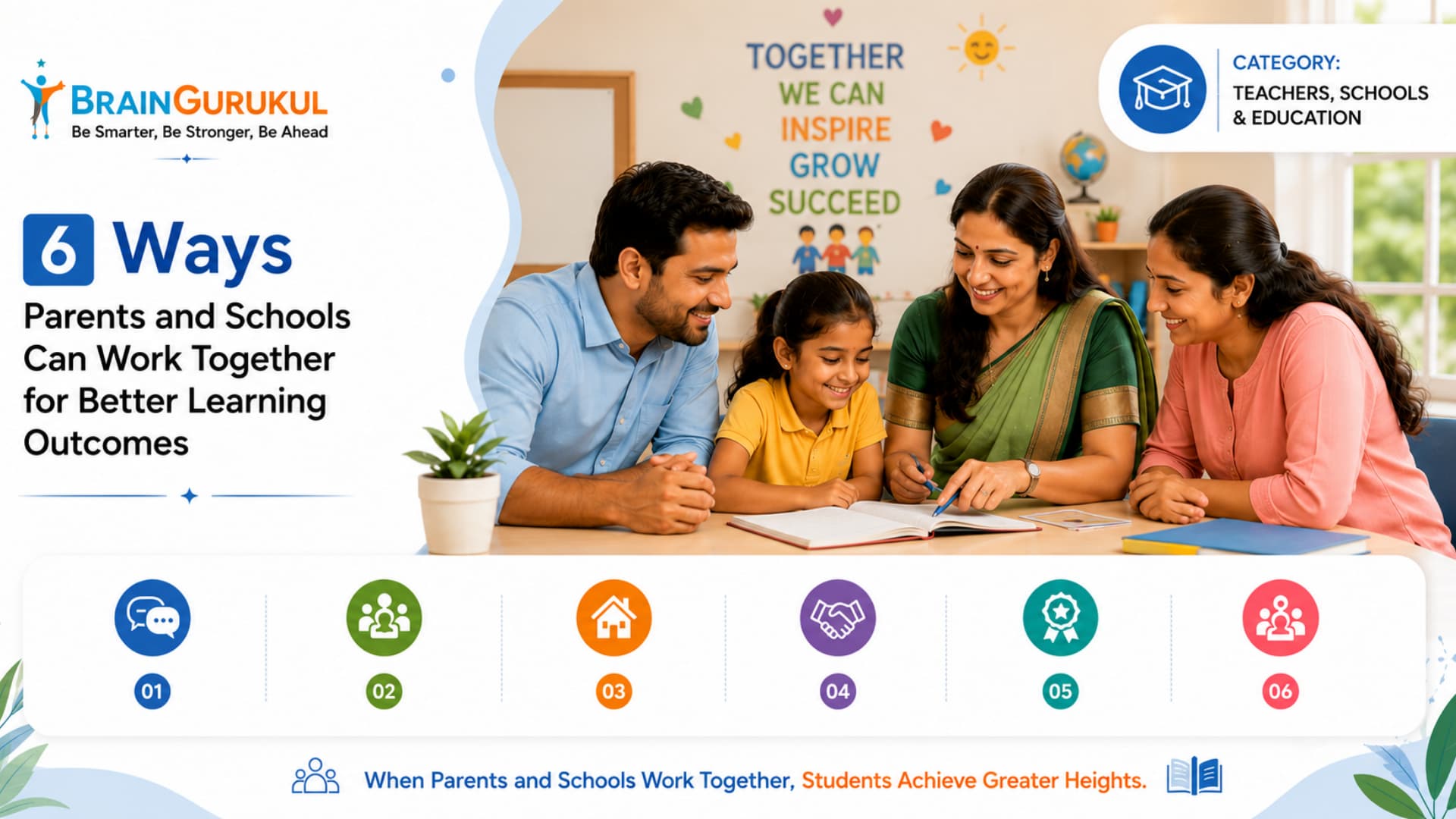
6 Ways Parents and Schools Can Work Together for Better Learning Outcomes
Parent-School Partnership • Student Learning • Parent Engagement • School Communication • Education
Students learn best when the important adults in their lives work in the same direction.
Parents understand the child’s habits, behaviour and home environment. Teachers understand classroom performance, participation and academic progress.
When both sides communicate and cooperate, students receive more consistent guidance.
Here are 6 practical ways parents and schools can work together for better learning outcomes.
________________________________________
1. Keep Communication Regular and Clear
Communication should not happen only when there is a problem.
Schools and parents can stay connected through:
• Parent-teacher meetings
• Progress updates
• Messages or emails
• Learning reports
• Short feedback conversations
Why It Helps
Regular communication reduces misunderstandings.
Parents know what is happening at school, and teachers gain useful insight into the student’s behaviour and routine at home.
Partnership Rule
Communicate early. Communicate clearly. Communicate regularly.
________________________________________
2. Share More Than Marks
A report card tells only part of the story.
Parents and teachers should also discuss:
• Effort
• Participation
• Confidence
• Homework habits
• Social behaviour
• Strengths
• Areas needing support
Why It Matters
A student’s learning journey is broader than test scores.
Better Question
Instead of asking only:
“How many marks did the child get?”
also ask:
“How is the child learning and progressing?”
________________________________________
3. Set Common Goals for the Student
Parents and teachers should agree on a few clear priorities.
For example:
• Improve reading consistency
• Complete homework independently
• Participate more in class
• Strengthen maths practice
• Improve time management
Why It Helps
When home and school reinforce the same goal, students receive consistent guidance.
Goal Formula
One Goal → Shared Support → Regular Review
Keep goals realistic and measurable.
________________________________________
4. Create Consistent Learning Habits at Home
Schools can guide parents on simple routines that support classroom learning.
These may include:
• Regular study time
• Reading practice
• Homework routine
• Reduced distractions
• Proper sleep
• Organised school materials
Why It Helps
Home routines can make classroom learning easier to sustain.
Parents do not need to become teachers.
Their role is to create a supportive environment where learning habits can grow.
Parent Rule
Support the routine, not every answer.
________________________________________
5. Solve Problems as a Team
When a student struggles, blame rarely helps.
Instead of:
“The school is not doing enough.”
or
“The parents are not supporting the child.”
focus on:
• What exactly is the problem?
• When does it happen?
• What has already been tried?
• What can school do?
• What can parents do?
• When will progress be reviewed?
Why It Matters
A shared problem-solving approach keeps attention on the student.
Partnership Loop
Identify → Plan → Support → Review
________________________________________
6. Recognise Progress Together
Students benefit when both home and school notice improvement.
Celebrate:
• Better effort
• Improved attendance
• More participation
• Completed goals
• Increased confidence
• Better learning habits
Why It Helps
Recognition reinforces positive behaviour.
It also shows students that parents and teachers are working together to support their growth.
Student Message
“We can see your progress, and we are supporting your journey.”
________________________________________
The PARTNER Formula
P — Promote Communication
Stay connected regularly.
A — Align Goals
Agree on clear priorities.
R — Recognise Progress
Notice improvement, not only results.
T — Team Up on Challenges
Solve problems together.
N — Nurture Good Habits
Support learning routines at home.
E — Exchange Useful Feedback
Share information from school and home.
R — Review Together
Check what is working and adjust when needed.
________________________________________
Key Takeaway
Parents and schools should not work as separate systems.
Students benefit most when both sides create a consistent support network.
Focus on:
Communication • Shared Goals • Learning Habits • Problem-Solving • Feedback • Recognition
When parents and schools work together, students receive stronger and more consistent support.
Brain Gurukul Perspective
At Brain Gurukul, we believe a child’s learning journey becomes stronger when parents, educators and learners work as partners.
Schools provide structured learning, while families provide everyday reinforcement, encouragement and context.
When these two environments communicate and collaborate effectively, students are better supported academically, emotionally and behaviourally.
One learner. One shared goal. One stronger partnership.
Read. Learn. Apply. Grow.
________________________________________
Blog Number: 67
Blog Name: 6 Ways Parents and Schools Can Work Together for Better Learning Outcomes
Word Count: ~760 words
Parent-School Partnership • Student Learning • Parent Engagement • School Communication • Education