
Parenting & Child Development
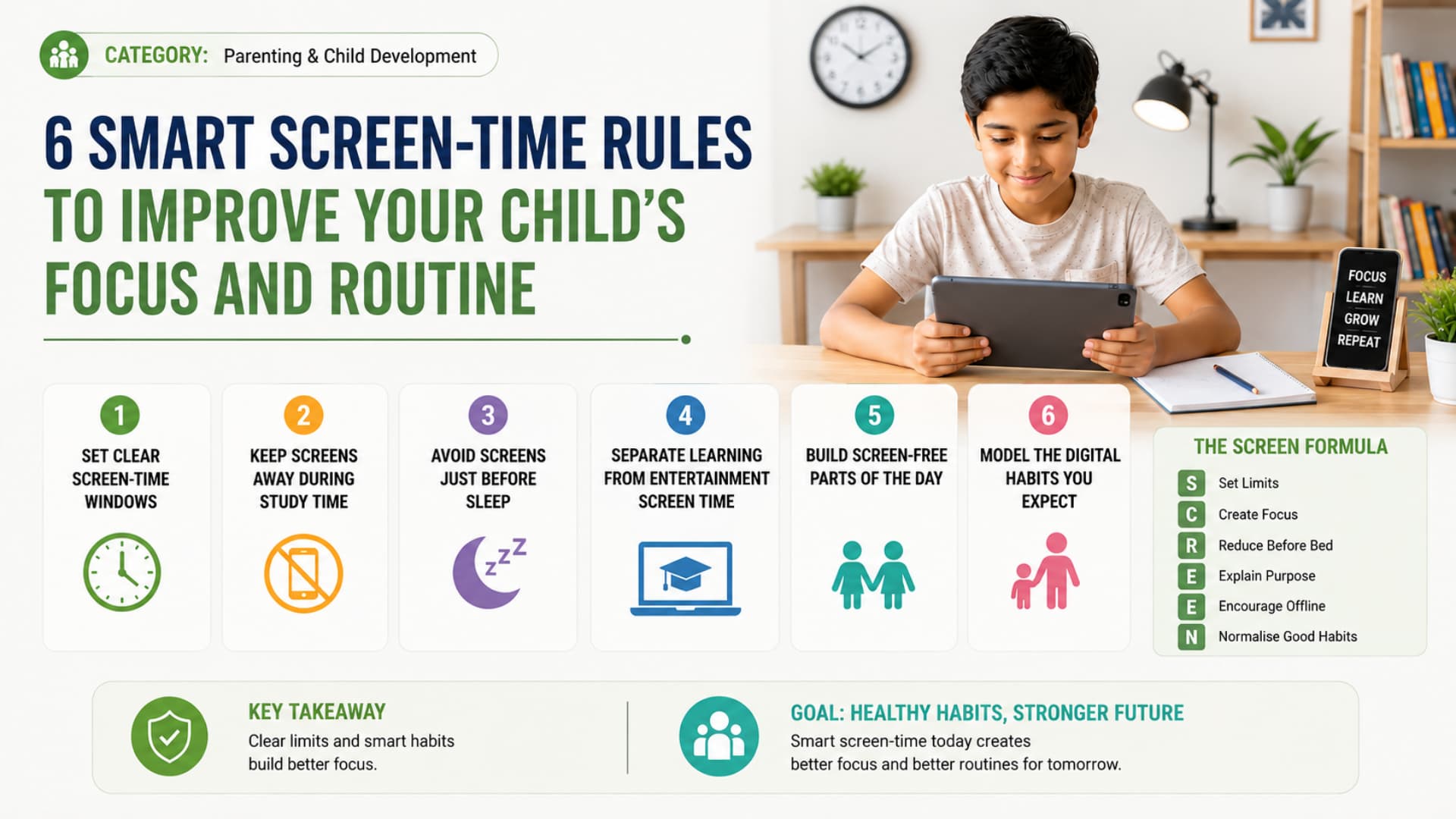
6 Smart Screen-Time Rules That Can Improve Your Child’s Focus and Routine
Screen Time • Parenting • Child Focus • Digital Habits • Healthy Routine
Screens are now part of everyday life.
Children use them for learning, entertainment, communication and creativity.
The challenge is not simply:
“How do we remove screens?”
A better question is:
“How do we help children use screens in a healthier, more balanced way?”
Too much unstructured screen use can interfere with routines, sleep, physical activity and focused learning. But sensible boundaries can help families create a better balance.
Here are 6 smart screen-time rules that can improve your child’s focus and daily routine.
________________________________________
1. Set Clear Screen-Time Windows
Avoid allowing screens to become available at every moment of the day.
Create simple time windows.
For example:
After homework → limited entertainment screen time
or
Evening → no recreational screens after a fixed time
Why It Matters
Clear timing reduces daily arguments.
Children know:
• When screen time is allowed
• When it ends
• What needs to happen first
Parent Tip
Consistency matters more than constantly changing the rules.
Clear rules create predictable routines.
________________________________________
2. Keep Screens Away During Study Time
Studying beside a phone or entertainment device makes distraction much easier.
Even when children are not actively using the device, notifications and the temptation to check it can interrupt attention.
Create a Focus Zone
During study time:
• Keep phones away
• Turn off unnecessary notifications
• Use only required learning apps
• Close entertainment tabs
• Keep the desk simple
Why It Matters
The brain learns better when attention is not constantly being redirected.
Study time should feel different from entertainment time.
________________________________________
3. Avoid Screens Just Before Sleep
A child may appear physically tired while the mind is still highly stimulated.
Late-night gaming, videos, messaging or scrolling can delay sleep routines.
Build a Digital Wind-Down
Try creating a screen-free period before bedtime.
Replace screens with:
• Reading
• Quiet conversation
• Preparing for the next day
• Light stretching
• Calm music
Why It Matters
A consistent bedtime routine makes it easier for children to transition from stimulation to rest.
Better evenings support better mornings.
________________________________________
4. Separate Educational and Entertainment Screen Time
Not all screen use is the same.
Watching an educational lesson, creating a presentation or researching a project is different from endlessly scrolling short videos.
Help Children Understand the Difference
Create two categories:
Purposeful Screen Time
• Learning
• Research
• Creative work
• Communication
Entertainment Screen Time
• Games
• Social media
• Videos
• Casual browsing
Why It Matters
This teaches children that technology is a tool, not simply a source of entertainment.
________________________________________
5. Build Screen-Free Parts of the Day
Children need experiences beyond screens.
Protect regular time for:
• Outdoor play
• Reading
• Family conversation
• Sports
• Creativity
• Hobbies
• Household responsibilities
Why It Matters
A balanced routine gives children opportunities to practise different abilities.
Physical movement, face-to-face interaction and creative activities provide experiences that a screen cannot fully replace.
Family Tip
Create certain screen-free zones such as:
Dining Table • Family Conversation Time • Study Sessions
________________________________________
6. Model the Digital Habits You Expect
Children notice what adults do.
It becomes difficult to say:
“Stop using your phone.”
while checking your own phone constantly during meals or conversations.
Model Healthy Behaviour
Parents can demonstrate:
• Keeping phones away during family time
• Not checking devices during conversations
• Taking breaks from social media
• Using screens purposefully
• Following shared family rules
Why It Matters
Children learn digital behaviour by observation as much as instruction.
Model first. Expect second.
________________________________________
The SCREEN Formula
S — Set Clear Limits
Define when screens can be used.
C — Create Focus Zones
Keep entertainment devices away during study.
R — Reduce Before Bed
Build a calmer evening routine.
E — Explain Purpose
Separate learning from entertainment.
E — Encourage Offline Activities
Protect movement, reading and family time.
N — Normalise Good Digital Behaviour
Parents should model the habits they expect.
________________________________________
Key Takeaway
Healthy screen management is not about making technology the enemy.
It is about teaching children to use technology with:
Purpose • Balance • Boundaries • Self-Control
The goal is not:
“No screens.”
The better goal is:
“Screens should support life—not control it.”
When children develop healthier digital habits, they create more space for focus, sleep, movement, relationships and learning.
Brain Gurukul Perspective
At Brain Gurukul, we believe Brain Optimization also requires protecting the habits that support attention and healthy learning.
Digital technology can be extremely useful when used with purpose and balance.
Use technology intelligently. Protect attention deliberately. Build healthier learners.
Read. Learn. Apply. Grow.
________________________________________
Blog Number: 26
Blog Name: 6 Smart Screen-Time Rules That Can Improve Your Child’s Focus and Routine
Word Count: ~770 words
Screen Time • Parenting • Child Focus • Digital Habits • Healthy Routine