Parenting & Child Development
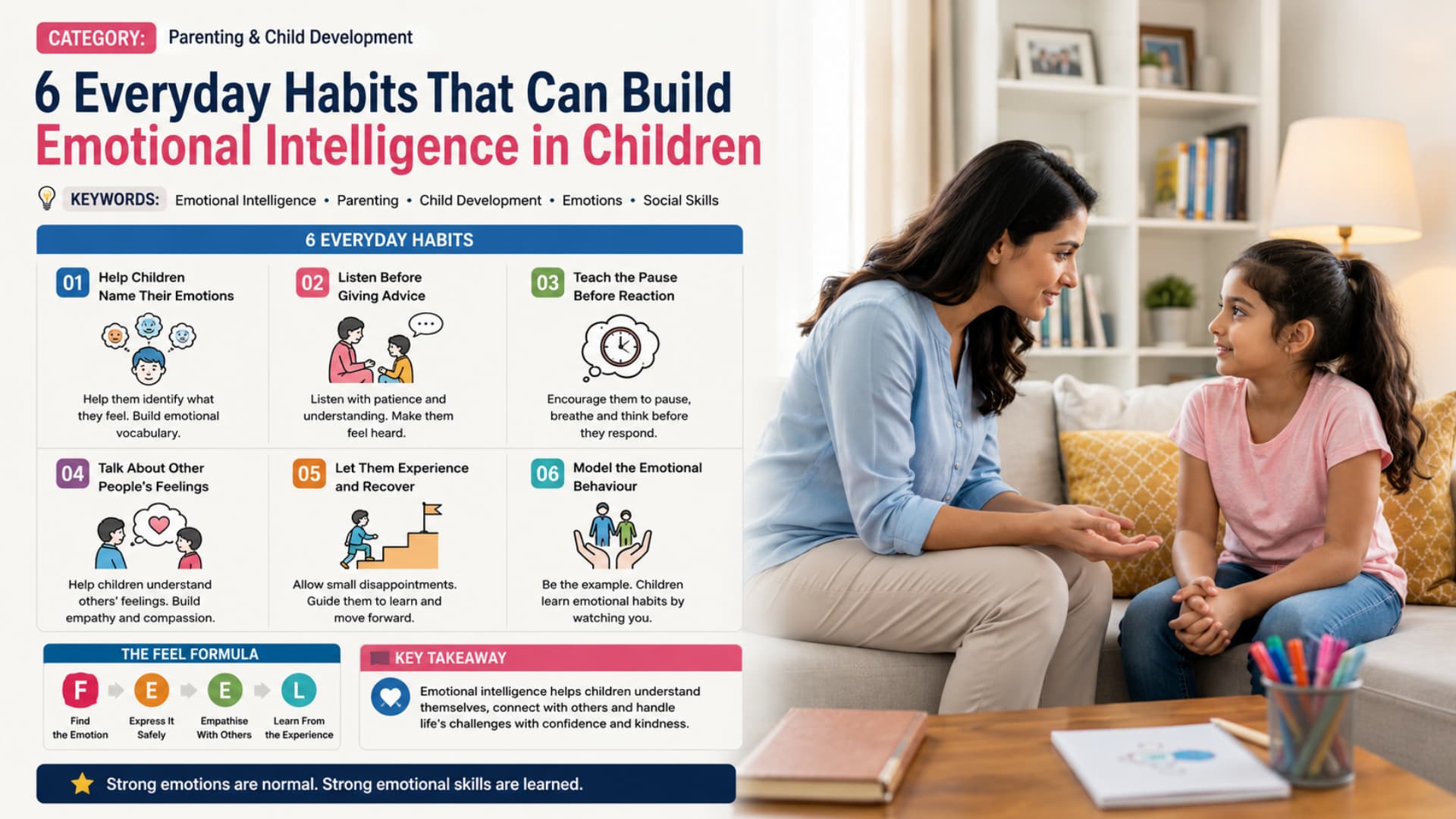
6 Everyday Habits That Can Build Emotional Intelligence in Children
Emotional Intelligence • Parenting • Child Development • Emotions • Social Skills
A child may perform well academically and still struggle to handle frustration, communicate feelings, understand others or recover after disappointment.
That is where emotional intelligence becomes important.
Emotional intelligence is the ability to recognise, understand and manage emotions while also responding appropriately to the feelings of others.
These skills develop gradually—and everyday family life gives parents many opportunities to strengthen them.
Here are 6 simple habits that can help build emotional intelligence in children.
________________________________________
1. Help Children Name Their Emotions
Children cannot manage feelings they cannot identify.
Instead of only saying:
“Stop crying.”
try asking:
“Are you feeling sad, frustrated, embarrassed or angry?”
Why It Matters
Naming an emotion helps the child understand what is happening internally.
Over time, children build a stronger emotional vocabulary.
Parent Tip
Use simple emotion words regularly:
Happy • Worried • Angry • Excited • Disappointed • Nervous • Proud
The better children can describe feelings, the easier it becomes to discuss them.
________________________________________
2. Listen Before Giving Advice
When children are upset, adults often jump quickly to solutions.
But sometimes children first need to feel heard.
Try:
“Tell me what happened.”
Then listen without interrupting.
Why It Matters
Listening communicates:
“Your feelings matter.”
Once the child feels understood, they are usually more open to guidance.
Better Sequence
Listen → Understand → Guide
Not:
Interrupt → Judge → Lecture
________________________________________
3. Teach the Pause Before Reaction
Strong emotions can lead to quick reactions.
Children can learn that feeling angry does not mean they must immediately shout, hit or say something hurtful.
Teach a Simple Pause
Try:
1. Stop.
2. Take a breath.
3. Name the feeling.
4. Think about what to do next.
Why It Matters
This develops emotional self-control.
The goal is not to suppress emotions.
It is to create a small space between feeling and action.
Parent Message
“Your feeling is real. Your response is still a choice.”
________________________________________
4. Talk About Other People’s Feelings
Emotional intelligence also includes empathy.
Use everyday situations to ask:
• How do you think they felt?
• Why might they have reacted that way?
• What could you say to help?
• What would you feel in their situation?
Why It Matters
These conversations help children see situations from another person’s perspective.
Stories, films and real-life events can all become opportunities to build empathy.
Parent Tip
Do not only ask:
“What happened?”
also ask:
“How did everyone involved feel?”
________________________________________
5. Let Children Experience and Recover From Disappointment
Parents naturally want to protect children from disappointment.
But small, manageable disappointments help children learn how to recover.
This may include:
• Losing a game
• Not getting selected
• Receiving lower marks
• Waiting for something they want
• Making a mistake
Why It Matters
Instead of immediately removing the discomfort, guide the child through it.
Ask:
“What can you learn from this?”
or
“What will you try next?”
Children gradually learn:
“I can feel disappointed and still move forward.”
That is emotional resilience.
________________________________________
6. Model the Emotional Behaviour You Expect
Children learn emotional habits by watching adults.
If parents shout whenever frustrated, children learn that pattern.
If parents pause, communicate and apologise when wrong, children see a different model.
Demonstrate
• Calm disagreement
• Respectful communication
• Apologising
• Managing frustration
• Expressing emotions clearly
• Listening to others
Why It Matters
Children notice how adults behave under pressure.
Parenting Rule
Model emotional intelligence before demanding it.
________________________________________
The FEEL Formula
F — Find the Emotion
Help children identify what they feel.
E — Express It Safely
Encourage healthy communication.
E — Empathise With Others
Understand different perspectives.
L — Learn From the Experience
Reflect, recover and move forward.
________________________________________
Key Takeaway
Emotional intelligence is not developed through one lecture.
It grows through repeated everyday experiences.
Parents can help children learn to:
Recognise • Express • Pause • Empathise • Recover • Respond Better
The goal is not to raise children who never feel angry, sad or disappointed.
The goal is to help them understand those emotions and manage them more intelligently.
Brain Gurukul Perspective
At Brain Gurukul, we believe true development includes both intellectual and emotional abilities.
Children who learn to understand themselves and others are better prepared for learning, relationships, decisions and future challenges.
Understand emotions. Manage responses. Build stronger life skills.
Read. Learn. Apply. Grow.
________________________________________
Blog Number: 37
Blog Name: 6 Everyday Habits That Can Build Emotional Intelligence in Children
Word Count: ~760 words
Emotional Intelligence • Parenting • Child Development • Emotions • Social Skills