Brain Science & Brain Optimization
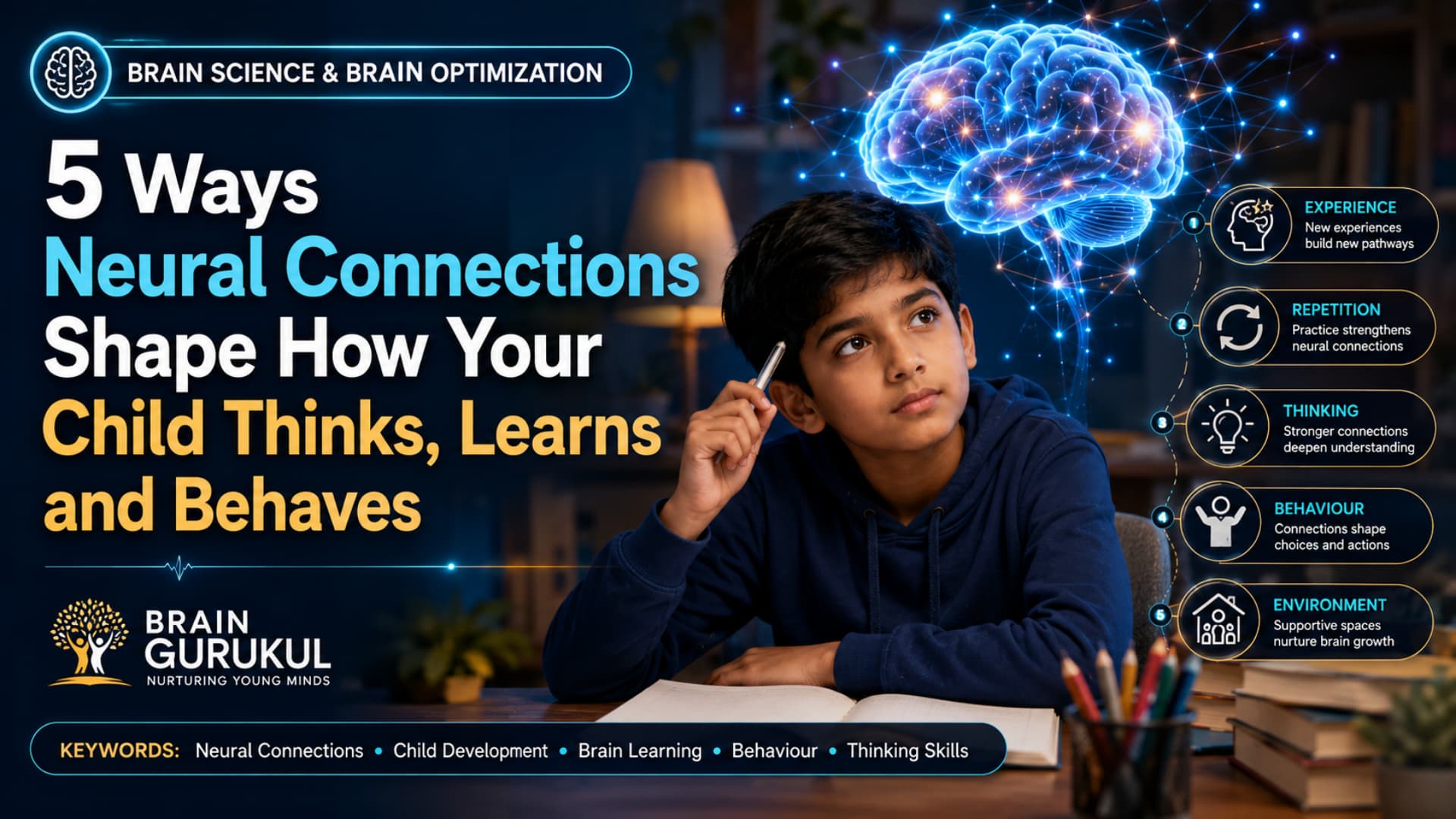
5 Ways Neural Connections Shape How Your Child Thinks, Learns and Behaves
Neural Connections • Child Development • Brain Learning • Behaviour • Thinking Skills
Why does one child learn quickly through stories, another through practice, and another through observation?
A major part of the answer lies in neural connections.
Neural connections are the communication pathways between brain cells. Every time a child sees, hears, moves, feels, practises or learns, the brain is building and strengthening these pathways.
In simple words:
A child’s brain develops through repeated experiences.
Here are 5 important ways neural connections shape how your child thinks, learns and behaves.
________________________________________
1. Neural Connections Help the Brain Learn From Experience
A child is not born knowing language, problem-solving, emotional control or study habits.
These abilities develop gradually as the brain forms connections through everyday experience.
This includes learning from:
• Parents
• Teachers
• Play
• Conversation
• Reading
• Observation
• Repetition
Why It Matters
The brain learns by doing and experiencing.
That means every meaningful interaction—talking, reading, explaining, exploring, asking questions—can support brain development.
Experience is not separate from development. It is part of development.
________________________________________
2. Repetition Strengthens Important Pathways
When a child repeats an activity, the related neural pathways become stronger and more efficient.
This may happen through:
• Practising handwriting
• Reading daily
• Solving maths questions
• Learning a musical skill
• Repeating memory exercises
• Following routines
At first, a new task may feel difficult.
But with repetition, the brain gradually becomes more comfortable with it.
Why It Matters
Children improve not only because they “grow older,” but because they practise useful patterns repeatedly.
What is repeated gets reinforced.
________________________________________
3. Neural Connections Influence Thinking and Problem-Solving
Thinking is not only about intelligence.
It also depends on how effectively the brain can process, connect and use information.
Strong learning experiences can support pathways related to:
• Attention
• Memory
• Observation
• Comprehension
• Decision-making
• Flexible thinking
Why It Matters
When children are encouraged to think, question, compare, explore and solve problems, they are not just completing activities.
They are developing mental pathways that support better thinking.
A thinking child becomes a stronger learner.
________________________________________
4. Neural Connections Also Shape Behaviour and Emotional Responses
The brain is involved not only in academics, but also in behaviour.
How children respond to frustration, instructions, routines, challenges and emotions is also linked with developing brain pathways.
For example, repeated experiences of:
• Calm guidance
• Positive routines
• Encouragement
• Emotional support
• Consistent boundaries
can help children build more organised behavioural patterns.
Why It Matters
Children do not learn behaviour only through lectures.
They learn through repeated emotional and social experiences.
What children experience regularly often influences how they respond later.
________________________________________
5. Environment Plays a Big Role in Building Connections
Neural connections are shaped not only by biology, but also by environment.
A child’s surroundings can influence how the brain develops.
Helpful environments often include:
• Conversation
• Reading exposure
• Play
• Movement
• Creativity
• Positive feedback
• Healthy routines
• Focused learning time
A brain does not need pressure all the time.
It needs meaningful stimulation and supportive guidance.
Why It Matters
A rich environment does not mean expensive tools.
Often, simple things matter most:
Talking, listening, reading, guiding, encouraging and engaging.
________________________________________
The BUILD Formula
B — Build Through Experience
Children learn from what they do and observe.
U — Use Repetition
Repeated activities strengthen pathways.
I — Improve Thinking
Challenge the brain with questions and problem-solving.
L — Link Emotions and Behaviour
Experiences shape responses and habits.
D — Develop Through Environment
Supportive surroundings help the brain grow.
________________________________________
Key Takeaway
Neural connections are one of the hidden foundations of child development.
They influence how children:
Think • Learn • Remember • Respond • Behave
That is why daily experiences matter so much.
Small actions repeated over time can create powerful developmental impact.
Brain Gurukul Perspective
At Brain Gurukul, we believe children should be given the right experiences, guidance and learning opportunities so their brain can build stronger pathways for learning and life.
Brain Optimization is not only about teaching more.
It is about helping the brain develop better connections for better performance.
Shape the experiences well—and you help shape the learner well.
Read. Learn. Apply. Grow.
(WC = 680)
Neural Connections • Child Development • Brain Learning • Behaviour • Thinking Skills