
Parenting & Child Development
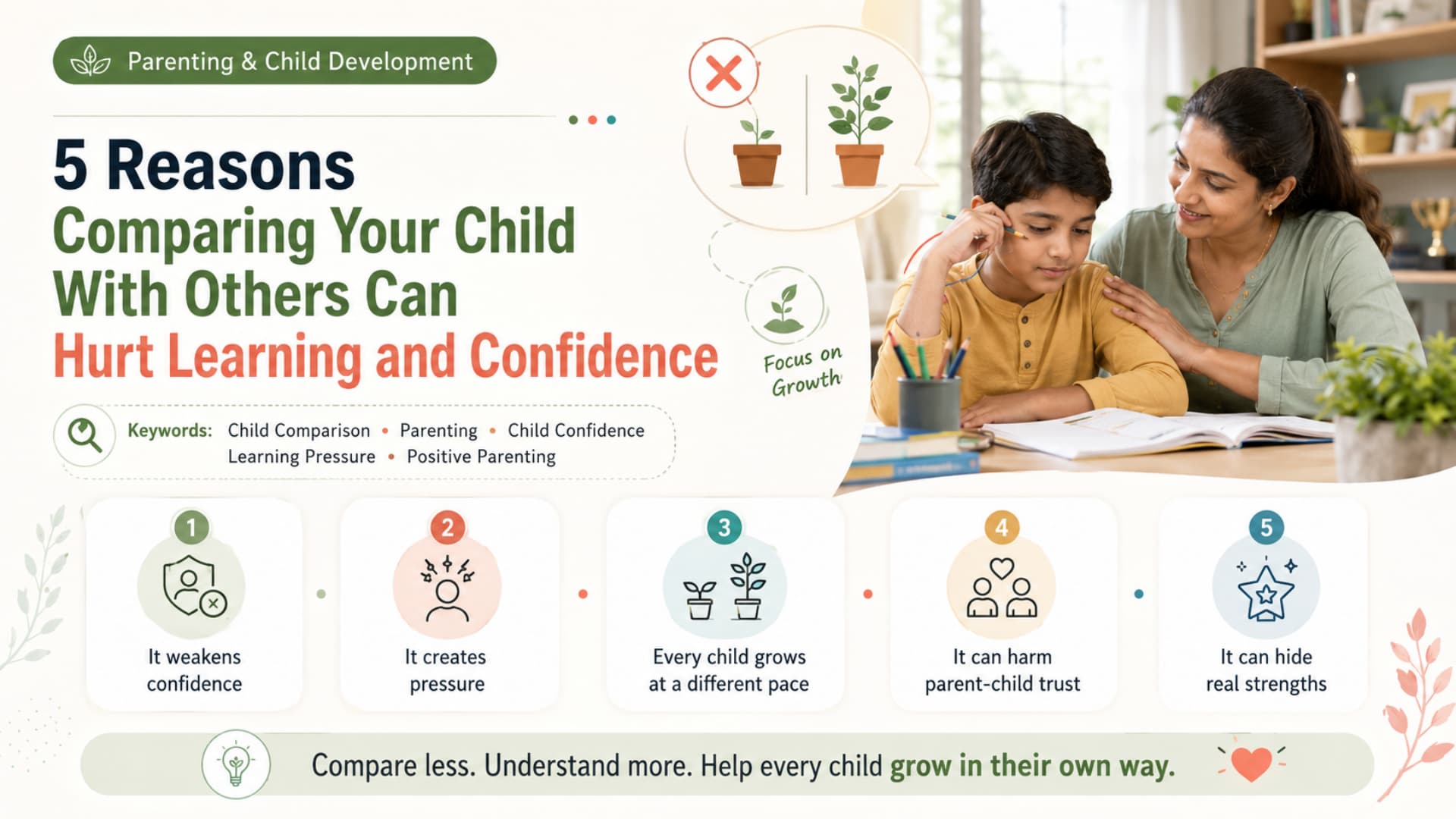
5 Reasons Comparing Your Child With Others Can Hurt Learning and Confidence
Child Comparison • Parenting • Child Confidence • Learning Pressure • Positive Parenting
Have you ever said:
“Look how well your cousin studies.”
or
“Why can’t you be more like your classmate?”
Many parents use comparison with good intentions. They hope it will motivate the child.
But frequent comparison can have the opposite effect.
Children differ in strengths, interests, learning pace, confidence and development. When they are repeatedly measured against someone else, they may begin to focus less on improvement and more on whether they are “better” or “worse” than others.
Here are 5 reasons comparison can hurt learning and confidence—and what parents can do instead.
________________________________________
1. Comparison Can Make Children Doubt Their Ability
When children repeatedly hear that someone else is performing better, they may begin thinking:
“Maybe I am not good enough.”
Over time, this can reduce confidence.
Why It Matters
A child who doubts their ability may become less willing to:
• Attempt difficult tasks
• Ask questions
• Participate
• Take healthy risks
• Try again after failure
Better Approach
Compare the child with their own previous performance.
Ask:
“What can you do today that was difficult last month?”
This keeps attention on growth.
________________________________________
2. Comparison Can Turn Learning Into Competition
Healthy competition can sometimes be motivating.
But constant comparison can make children believe that learning is mainly about defeating someone else.
Instead of asking:
“Did I improve?”
the child may start asking:
“Did I score more than them?”
Why It Matters
This can reduce curiosity and increase pressure.
Learning works better when children also value:
Understanding • Improvement • Effort • Skill Development
Parent Tip
Celebrate personal progress, not only rank.
________________________________________
3. Every Child Develops at a Different Pace
Children do not all develop abilities at the same speed.
One may learn reading quickly.
Another may become stronger in mathematics later.
Another may show exceptional creativity or communication.
Why It Matters
Comparing two children at one moment ignores their individual developmental journeys.
A child who needs extra practice today may perform very differently six months later.
Remember
Different timing does not mean less potential.
Give children enough space to develop at their own pace while still maintaining healthy expectations.
________________________________________
4. Comparison Can Damage the Parent–Child Relationship
Repeated comparison may make children feel that approval depends on performance.
They may start hiding:
• Poor marks
• Mistakes
• Difficulties
• Questions
• Fear of failure
Why It Matters
Parents need honest information to guide children well.
If a child is afraid of disappointing the parent, they may stop sharing what they are actually struggling with.
Better Response
Instead of:
“Your friend scored 90. Why did you get 70?”
try:
“Let’s understand where you lost marks and what we can improve.”
The second conversation focuses on development rather than judgement.
________________________________________
5. Comparison Can Hide the Child’s Real Strengths
When parents constantly compare one area—usually marks—they may overlook other important abilities.
A child may have strengths in:
• Creativity
• Communication
• Leadership
• Observation
• Sport
• Music
• Problem-solving
• Emotional intelligence
Why It Matters
Children need opportunities to discover a broader picture of themselves.
Marks matter, but they are only one part of development.
Parent Tip
Ask:
“Where does my child naturally show interest, effort and capability?”
That question may reveal strengths that comparison hides.
________________________________________
What Should Parents Do Instead?
Use the GROWTH approach.
G — Gauge Personal Progress
Compare the child with their previous performance.
R — Recognise Strengths
Notice abilities beyond marks.
O — Observe the Real Problem
Understand why the child is struggling.
W — Work on Improvement
Build skills instead of criticising weaknesses.
T — Talk Positively
Use language that encourages effort and learning.
H — Honour Individual Pace
Allow development to happen over time.
________________________________________
Key Takeaway
Comparison may produce short-term pressure.
But long-term development needs something stronger:
Understanding • Support • Practice • Confidence • Personal Progress
Instead of saying:
“Why aren’t you like them?”
try asking:
“How can you become a better version of yourself?”
That shift moves the child from competition toward growth.
Brain Gurukul Perspective
At Brain Gurukul, we believe every child has a unique combination of strengths, abilities and developmental needs.
The goal of Brain Optimization is not to make children identical.
It is to help each learner discover potential, develop abilities and progress from their own starting point.
Compare less. Understand more. Develop the individual.
Read. Learn. Apply. Grow.
________________________________________
Blog Number: 33
Blog Name: 5 Reasons Comparing Your Child With Others Can Hurt Learning and Confidence
Word Count: ~760 words
Child Comparison • Parenting • Child Confidence • Learning Pressure • Positive Parenting