Teachers, Schools & Education
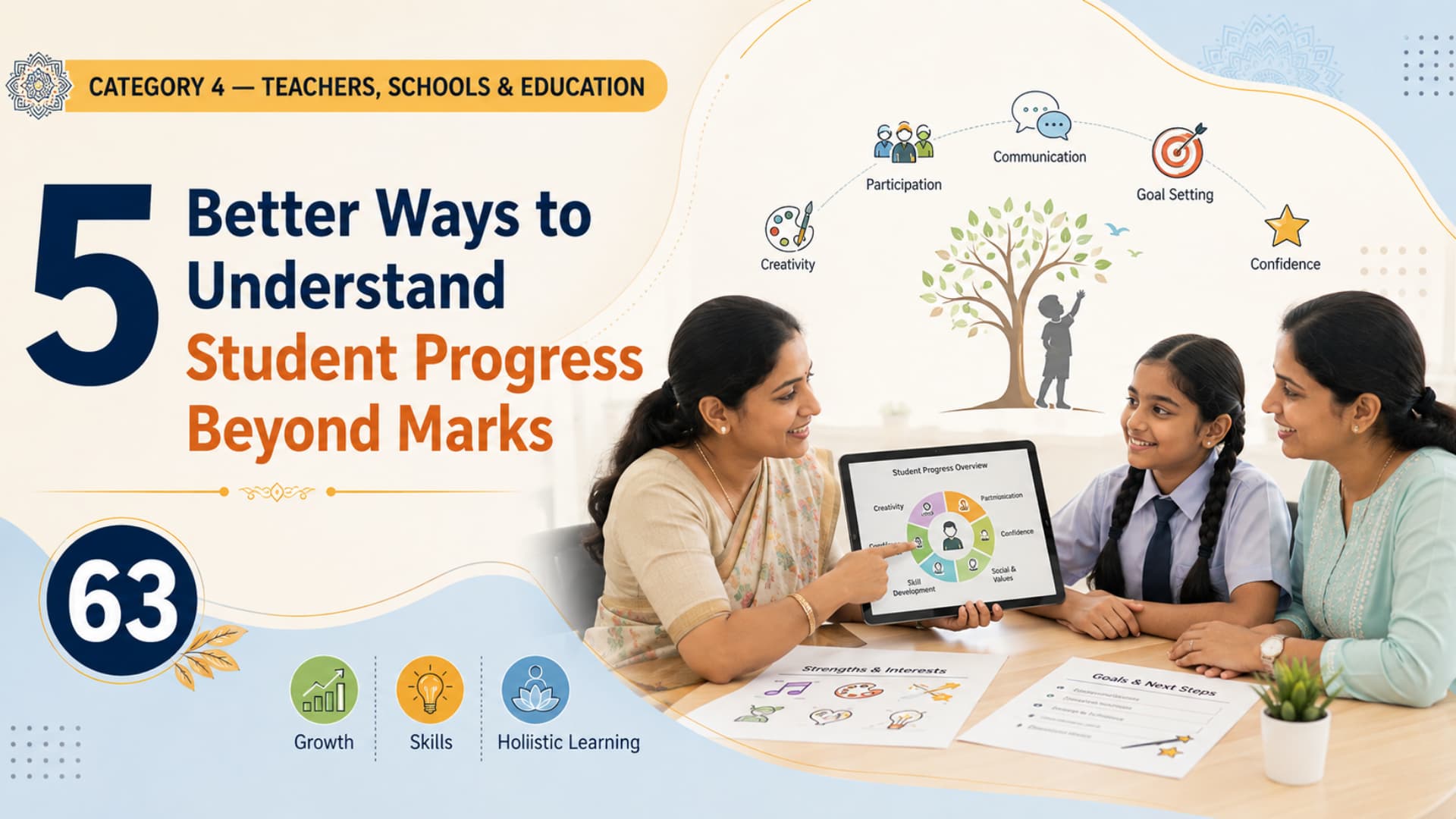
5 Better Ways to Understand Student Progress Beyond Marks
Student Progress • Assessment • Learning Growth • Classroom Evaluation • Education
Marks are useful.
But they do not tell the whole story.
A student may score well and still struggle with confidence, application or independent thinking. Another student may score average marks but show strong improvement, curiosity, effort and problem-solving ability.
That is why student progress should be understood through more than exam scores alone.
Here are 5 better ways teachers can understand student progress beyond marks.
________________________________________
1. Track Improvement Over Time
Do not look only at the latest score.
Compare progress across weeks or months.
Observe:
• Is the student making fewer mistakes?
• Is understanding becoming clearer?
• Is work becoming more accurate?
• Is the student completing tasks more independently?
Why It Helps
Improvement shows growth.
A student moving from 50% to 65% may be progressing more meaningfully than someone consistently scoring 85% without improvement.
Teaching Rule
Measure growth, not only position.
________________________________________
2. Observe How Students Think
A final answer does not always reveal the quality of thinking behind it.
Watch how students:
• Approach a problem
• Explain an idea
• Choose a method
• Respond to mistakes
• Ask questions
Why It Helps
Thinking processes can reveal strengths that marks may miss.
A student may reach the wrong answer but use a strong logical approach.
That still provides valuable information for the teacher.
Classroom Question
Ask:
“How did you think about this?”
________________________________________
3. Look at Participation and Engagement
Progress is also visible in how students participate.
Notice whether they:
• Ask more questions
• Contribute to discussions
• Attempt difficult tasks
• Work with others
• Stay focused longer
• Show curiosity
Why It Matters
Increased participation may indicate stronger confidence and understanding.
Some students show growth in behaviour before it appears in marks.
Teacher Reminder
Participation should not mean only speaking frequently.
Quiet students may show engagement through written work, careful listening and thoughtful responses.
________________________________________
4. Use Portfolios and Work Samples
Collect examples of student work over time.
These may include:
• Written assignments
• Projects
• Drawings
• Problem-solving tasks
• Reflections
• Presentations
Why It Helps
A portfolio creates visible evidence of development.
Teachers, students and parents can compare earlier work with recent work.
Progress Question
Ask:
“What can this student do now that they could not do earlier?”
That is often a more meaningful measure of learning.
________________________________________
5. Include Student Self-Reflection
Students can also help evaluate their own progress.
Ask them regularly:
• What have I improved?
• What still feels difficult?
• What am I proud of?
• What goal should I work on next?
• What strategy helped me most?
Why It Helps
Self-reflection develops awareness and ownership.
Students begin seeing learning as something they actively manage.
Reflection Loop
Notice → Reflect → Set Goal → Improve
________________________________________
The GROW Formula
G — Gauge Improvement
Compare progress over time.
R — Review Thinking
Observe how students solve and explain.
O — Observe Engagement
Notice confidence, participation and effort.
W — Watch Evidence
Use portfolios, reflections and work samples.
________________________________________
Key Takeaway
Marks are important, but they are only one part of student progress.
A fuller picture includes:
Growth • Thinking • Participation • Work Quality • Reflection
When teachers use multiple forms of evidence, they can understand students more accurately and support them more effectively.
Progress is not only about what a student scores. It is also about how much they grow.
Brain Gurukul Perspective
At Brain Gurukul, we believe meaningful learning should be understood through multiple dimensions.
Academic scores matter, but so do confidence, comprehension, critical thinking, learning habits and the ability to apply knowledge.
When educators look beyond marks, they can recognise progress that traditional assessments may not always capture.
Measure growth. Understand the learner. Support the journey.
Read. Learn. Apply. Grow.
________________________________________
Blog Number: 63
Blog Name: 5 Better Ways to Understand Student Progress Beyond Marks
Word Count: ~735 words
Student Progress • Assessment • Learning Growth • Classroom Evaluation • Education