
Teachers, Schools & Education
10 Simple Ideas to Make Any Classroom More Engaging
Classroom Engagement • Teaching Ideas • Student Participation • Active Learning • Education
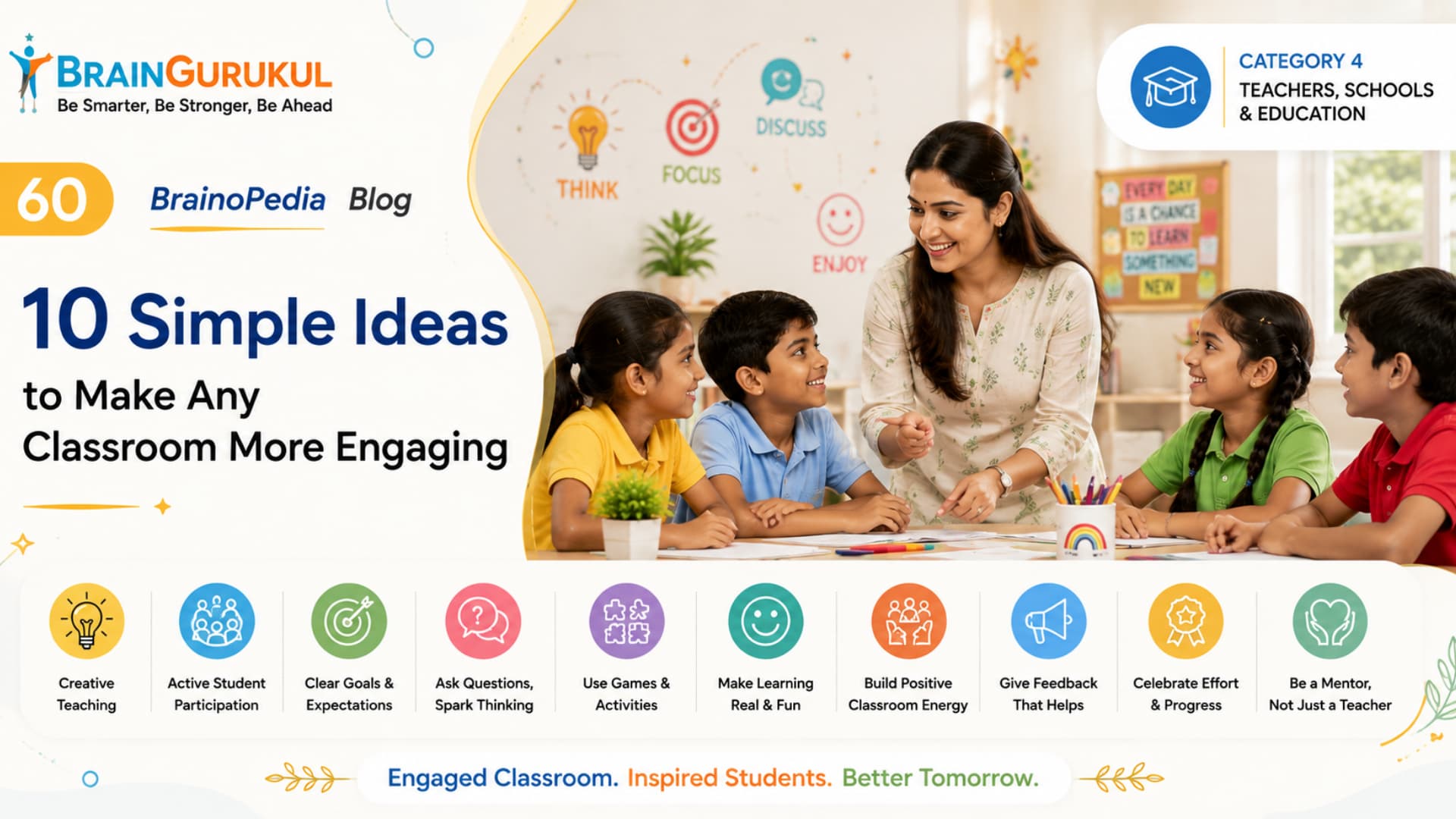
A good classroom is not one where students simply sit quietly.
It is one where they are thinking, participating, questioning, discussing and applying what they learn.
Student engagement does not always require expensive technology or complicated activities. Often, small changes in teaching style can make a big difference.
Here are 10 simple ideas that can make any classroom more engaging.
________________________________________
1. Begin With a Strong Question
Instead of starting immediately with a definition, begin with a question.
For example:
“Why do we remember some things and forget others?”
or
“What would happen if gravity disappeared for one minute?”
Why It Helps
Questions create curiosity.
They make students mentally enter the lesson before the explanation begins.
Teaching Rule
Start with curiosity, not only content.
________________________________________
2. Connect Lessons With Real Life
Students engage more when they understand why a topic matters.
Relate lessons to:
• Daily life
• Current situations
• Home experiences
• Technology
• Careers
• Familiar examples
Why It Helps
Real-life connections make abstract ideas easier to understand.
Teacher Question
Ask:
“Where does this concept appear outside the classroom?”
________________________________________
3. Use Short Student Discussions
Do not make every lesson teacher-led.
Pause and ask students to discuss a question with a partner or small group.
Why It Helps
Discussion encourages:
• Participation
• Thinking
• Communication
• Confidence
Even a two-minute discussion can make students more active.
Classroom Strategy
Think → Discuss → Share
________________________________________
4. Use Visuals Wherever Possible
A long explanation can often become clearer with a simple visual.
Use:
• Diagrams
• Charts
• Pictures
• Timelines
• Maps
• Models
• Simple demonstrations
Why It Helps
Visuals can simplify complex information and make lessons easier to remember.
Teaching Tip
Do not use visuals only for decoration.
Use them to clarify meaning.
________________________________________
5. Ask More “How” and “Why” Questions
Questions that require only one-word answers may not encourage much thinking.
Instead, ask:
• Why do you think this happened?
• How would you solve this?
• What could be another explanation?
• What might happen next?
Why It Helps
These questions encourage deeper thinking and better classroom discussion.
Classroom Rule
Move from remembering to reasoning.
________________________________________
6. Give Students Small Choices
Whenever possible, let students choose how they complete a task.
For example:
Write a paragraph OR create a diagram.
Present individually OR with a partner.
Why It Helps
Choice increases ownership.
Students often participate more when they feel involved in the learning process.
________________________________________
7. Turn Review Into a Quick Game
Revision does not always need to feel repetitive.
Try:
• Rapid-fire questions
• Team quizzes
• True or false
• Guess the concept
• One-minute challenge
Why It Helps
Games can increase energy while still reinforcing learning.
Teacher Reminder
Keep the activity focused on the learning objective.
Fun should support learning, not replace it.
________________________________________
8. Invite Students to Teach
Ask students to explain a concept to the class, a partner or their group.
Why It Helps
Teaching forces students to organise their thoughts.
It can also reveal whether they truly understand the topic.
Simple Technique
Learn → Explain → Clarify
________________________________________
9. Recognise Participation and Effort
Do not praise only correct answers.
Also recognise:
• Good questions
• Improvement
• Thoughtful attempts
• Creative ideas
• Teamwork
Why It Matters
Students are more willing to participate when they know effort is valued.
Classroom Mindset
Participation grows when students feel safe to try.
________________________________________
10. End With a Quick Reflection
Before students leave, ask one simple question:
• What is one thing you learned today?
• What surprised you?
• What is still unclear?
• What would you like to explore further?
Why It Helps
Reflection helps students process the lesson.
It also gives teachers useful feedback.
Closing Routine
Learn → Reflect → Remember
________________________________________
The ENGAGE Formula
E — Excite Curiosity
Start with questions.
N — Notice Student Thinking
Listen to responses.
G — Give Participation Opportunities
Use discussion and activities.
A — Add Real-Life Connections
Make learning relevant.
G — Give Choices and Challenges
Increase ownership.
E — End With Reflection
Help students process the lesson.
________________________________________
Key Takeaway
An engaging classroom does not require constant entertainment.
It requires meaningful student involvement.
Use:
Questions • Discussions • Visuals • Choice • Games • Explanation • Recognition • Reflection
When students participate in learning, the classroom becomes more powerful.
Brain Gurukul Perspective
At Brain Gurukul, we believe effective classrooms should encourage curiosity, confidence, active participation and deeper understanding.
When students are given opportunities to think, discuss, explain and apply, they become more involved in the learning process.
Engage the learner. Activate thinking. Make learning meaningful.
Read. Learn. Apply. Grow.
________________________________________
Blog Number: 60
Blog Name: 10 Simple Ideas to Make Any Classroom More Engaging
Word Count: ~760 words
Classroom Engagement • Teaching Ideas • Student Participation • Active Learning • Education